Detailed Specifications and Key Features of the John Deere 27C Mini Excavator
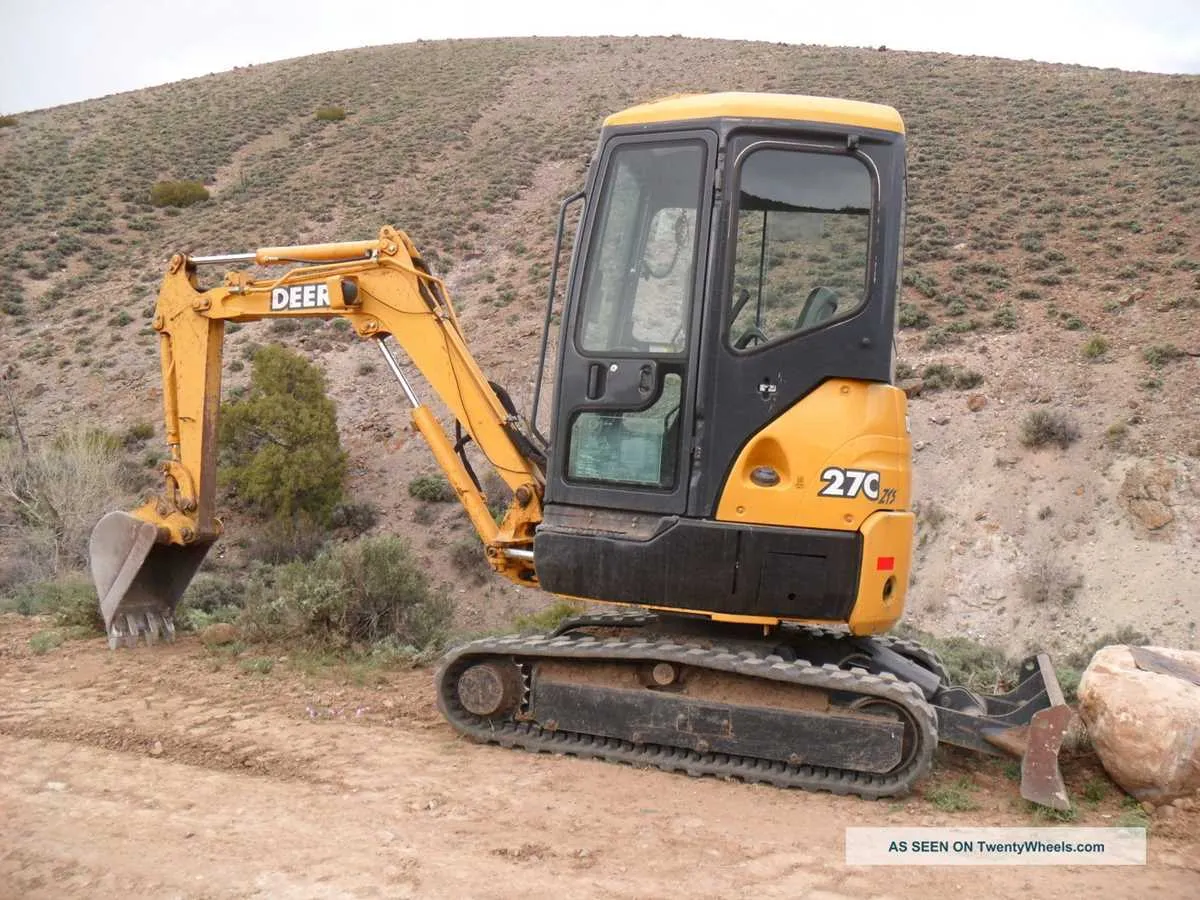
The John Deere 27C mini excavator weighs approximately 2,700 kg (5,952 lbs), making it highly maneuverable in confined job sites while maintaining stability for various tasks. It features a compact design with an overall length near 4.3 meters (14 feet) and a width of about 1.5 meters (5 feet), allowing it to access tight spaces with ease.
The machine is powered by a 24.7 horsepower diesel engine, providing efficient fuel consumption and reliable performance. Its hydraulic system delivers precise control and smooth operation, with a maximum digging depth reaching 3 meters (9.8 feet) and a maximum reach of roughly 5.3 meters (17.4 feet).
Operator comfort is enhanced by an adjustable seat, intuitive controls, and excellent visibility through a spacious cab. The 27C supports various attachments, including buckets and hydraulic thumbs, expanding its versatility for landscaping, utility work, and small construction projects.
John Deere 27C Mini Excavator Specs Detailed Practical Overview

Operating weight of the John Deere 27C is approximately 2,950 kg (6,504 lbs), making it highly maneuverable on tight job sites while maintaining stability during heavy digging tasks.
The engine is a turbocharged Yanmar 3TNV88, delivering 18.4 kW (24.7 hp) at 2,400 rpm, providing reliable power with efficient fuel consumption suited for extended operation.
Hydraulic system features a variable displacement pump with a maximum flow rate of 53 L/min (14 gpm), enabling smooth, responsive control of the boom, arm, and bucket movements.
The digging depth reaches up to 3.3 meters (10 feet 10 inches), allowing the 27C to handle common excavation tasks such as trenching and foundation work with precision.
Bucket breakout force stands at roughly 22.2 kN (5,000 lbs), providing the strength needed for breaking through compact soils and small rock formations.
With a tail swing radius of just 1.4 meters (4 feet 7 inches), the 27C fits comfortably in confined spaces, minimizing the risk of damage to surrounding structures.
The travel speed maxes out at 4.1 km/h (2.5 mph), which balances site mobility with operational control during transport across work zones.
Operators benefit from a comfortable cab design that offers clear visibility and intuitive controls, reducing fatigue during extended shifts.
Attachment versatility includes compatibility with standard buckets, hydraulic hammers, and thumbs, expanding the range of jobsite applications.
Overall, the John Deere 27C combines compact dimensions with practical power and hydraulic performance tailored to small to medium excavation projects.
Compact Dimensions and Operating Weight for Site Accessibility
The John Deere 27C mini excavator features a compact width of 2,135 mm (84 inches) and a transport height of 2,450 mm (96.5 inches), allowing it to maneuver easily through tight spaces and narrow job sites. Its overall length of 4,730 mm (186 inches) supports effective positioning without requiring excessive clearance.
Operating weight stands at approximately 2,760 kg (6,084 lbs), balancing stability and portability. This weight enables safe operation on various ground conditions while remaining light enough for transport on standard trailers without special permits.
The tight tail swing radius of 1,320 mm (52 inches) reduces the risk of collision with surrounding obstacles, improving operator confidence in confined environments. The adjustable undercarriage width, ranging from 1,520 mm to 1,820 mm (60 to 72 inches), offers versatility for both stability and access.
These dimensions and weight make the 27C ideal for urban construction, utility work, and landscaping projects where space is limited but performance cannot be compromised.
Engine Performance and Fuel Consumption for Work Planning
The John Deere 27C mini excavator features a 17.7 hp diesel engine delivering reliable power for a range of tasks. This engine produces a maximum torque of approximately 56 Nm, providing steady performance under varying loads.
Fuel consumption averages around 1.6 liters per hour during typical digging operations. Monitoring fuel use closely helps optimize work schedules and minimize downtime for refueling.
- Maintain engine speed within the recommended range (1,800 to 2,400 rpm) to balance power output and fuel efficiency.
- Use the auto-idle feature to reduce fuel usage during idle periods without compromising responsiveness.
- Schedule regular maintenance such as air filter cleaning and fuel system checks to ensure optimal combustion and reduce fuel waste.
- Plan tasks to minimize unnecessary engine load spikes, avoiding rapid acceleration or excessive lifting cycles.
By aligning work patterns with the engine’s performance characteristics, operators can extend fuel autonomy and maintain consistent machine output throughout the day.
Hydraulic System Capabilities and Attachment Compatibility
The John Deere 27C mini excavator features a hydraulic system delivering a maximum flow of 23.4 gallons per minute (GPM), enabling smooth and precise control of attachments. The system pressure reaches up to 3,000 psi, supporting a variety of hydraulic tools without loss of performance.
Dual auxiliary hydraulic circuits provide flexibility, allowing simultaneous operation of multiple attachments such as augers, thumbs, and breakers. This setup ensures quick attachment changes and reliable power delivery, optimizing job site productivity.
The hydraulic couplers are standard quick-connect types, simplifying attachment swaps and minimizing downtime. Compatibility extends to John Deere’s proprietary attachment lineup as well as many industry-standard tools, increasing versatility.
Operators can adjust auxiliary flow settings via the control panel, tailoring hydraulic output for specific attachments to prevent damage and maintain efficient operation. The system also features automatic pressure compensation to maintain consistent performance under varying load conditions.
Hydraulic oil capacity of 9.6 gallons supports extended operation without frequent fluid changes, enhancing uptime. Regular maintenance and use of recommended hydraulic fluids maintain system reliability and prolong component life.