John Deere 1990 Air Drill Specifications and Features for Precision Farming
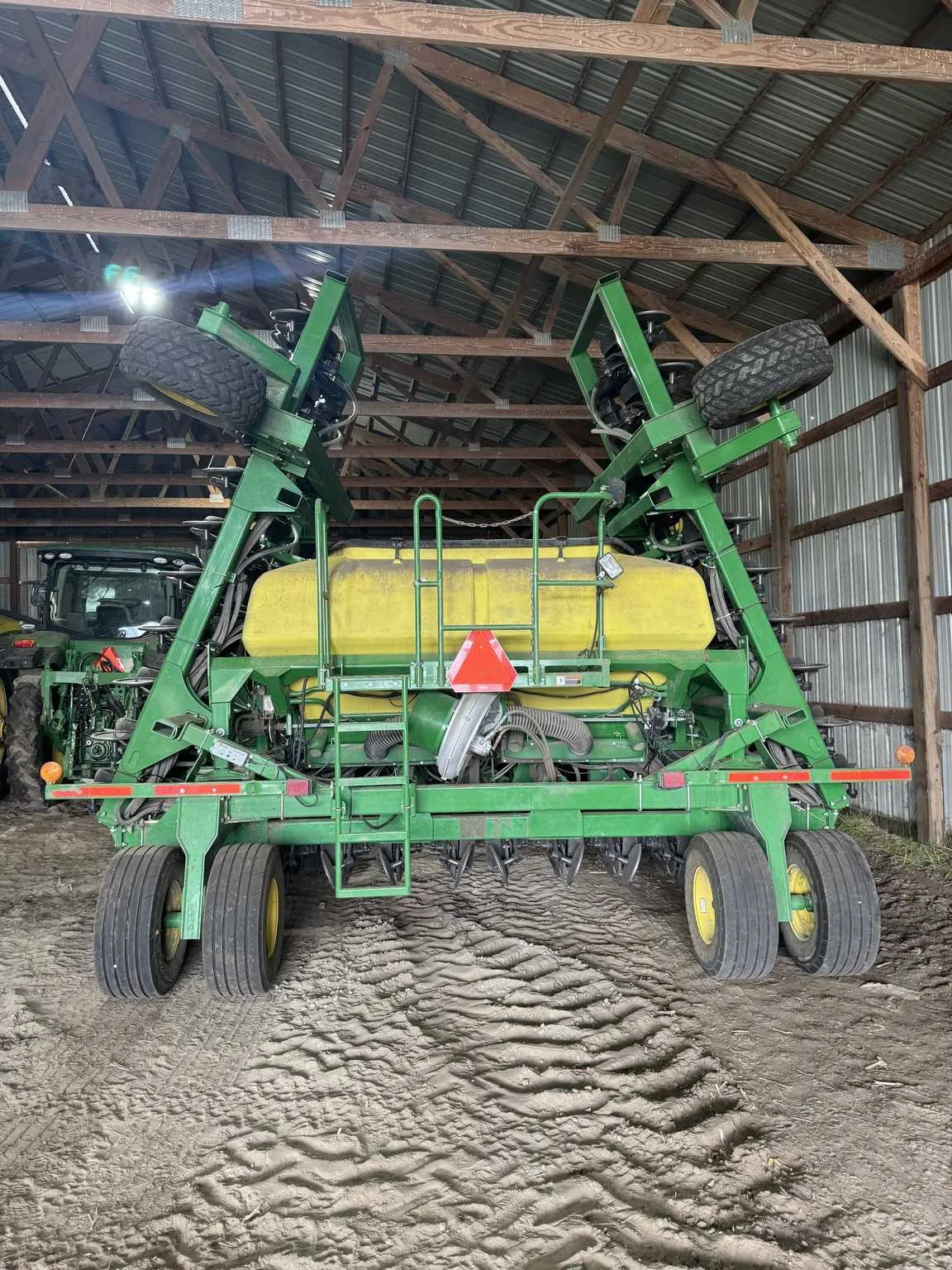
The John Deere 1990 Air Drill is a high-performance machine built for precise seed placement and efficient seeding operations. It’s designed to handle a variety of soil types, delivering consistent results in diverse field conditions. Whether you’re planting small grains or larger seeds, this drill offers the flexibility to match your needs with adjustable settings for depth and spacing.
Key specifications of the 1990 model include a working width ranging from 30 to 60 feet, depending on the configuration. This width ensures efficient coverage for large-scale operations, helping reduce field pass numbers and improve productivity. The machine is equipped with a high-capacity seed tank, available in both single and dual tank options, allowing for precise fertilizer application along with the seed. The dual tank system is especially beneficial for mixing different types of fertilizer or planting seeds at varying rates.
For better ground contact and consistent seeding, the 1990 Air Drill features the active hydraulic downforce system. This system automatically adjusts pressure to match the soil conditions, ensuring that seed depth remains consistent throughout the field. The row units are equipped with cast iron openers, which are durable and provide reliable seed placement. The machine’s versatile design allows for easy adjustments to row spacing, from 7.5 to 10 inches, adapting to specific crop requirements.
With a user-friendly control system, operators can monitor and adjust settings on the fly, reducing downtime and optimizing performance. The 1990 Air Drill also integrates seamlessly with John Deere’s GPS and guidance systems, enabling precise mapping of seeding patterns for greater accuracy in subsequent planting seasons.
John Deere 1990 Air Drill Specifications
The John Deere 1990 Air Drill offers a solid mix of precision and durability, ideal for large-scale planting. With row widths ranging from 7.5 to 10 inches, it provides flexibility for various field conditions and crop types. Its seed and fertilizer placement is consistently accurate due to the proven ExactEmerge system, which maintains uniform seed depth and spacing.
Engineered for efficiency, the 1990 Air Drill is equipped with a 400-bushel or 600-bushel seed tank, making it suitable for long hours in the field without frequent refills. The precise metering system and air seeding technology ensure accurate distribution of seed and fertilizer, minimizing waste and optimizing crop yield.
The robust frame design is built to handle tough field conditions, with a high-clearance configuration for maneuvering over uneven terrain. The unit’s pneumatic system provides even air pressure across all rows, ensuring uniform seed placement even in variable soil conditions. The 1990 Air Drill is also compatible with John Deere’s 1910 Air Cart, enhancing its versatility in handling different seed types and fertilizer blends.
For ease of operation, the 1990 comes with a user-friendly hydraulic control system that simplifies adjustments, while its section control technology reduces overlap, saving on both seed and input costs. The durable openers on the drill ensure consistent depth and reduce wear over time.
When choosing the John Deere 1990 Air Drill, you gain a reliable machine that balances high productivity with minimal maintenance, making it a solid choice for serious farmers looking to improve planting efficiency. With its precision features and strong build, this drill performs across various soil conditions and field types.
Key Features and Technical Specifications of the John Deere 1990 Air Drill
The John Deere 1990 Air Drill is designed for precision seeding, providing high accuracy and versatility in the field. It features a flexible, wide range of row configurations, making it ideal for various soil types and crop needs. With a robust build and cutting-edge technology, it ensures optimal planting depth and consistent seed placement.
The drill comes with a choice of 12, 15, 20, or 30-foot working widths, allowing users to select the most appropriate configuration based on field size and requirements. The 1990 Air Drill is equipped with an advanced air delivery system that ensures uniform seed and fertilizer distribution, crucial for maximizing crop yield.
The system integrates well with John Deere’s SeedStar monitoring technology, offering real-time tracking of seed placement and fertilizer application. This results in precise adjustments during operation, leading to enhanced field performance. The machine also features an adjustable downforce system that ensures the correct pressure is applied for consistent seed depth, regardless of soil conditions.
The heavy-duty frame of the John Deere 1990 Air Drill provides stability and durability under challenging conditions. Its 15″ or 18″ diameter openers are designed to cut through compacted soil, providing an even and clean seed trench. The drill is compatible with a variety of soil conditions, thanks to its depth-control systems and variable row spacings, which can be adjusted to match specific planting needs.
Maintenance is straightforward with easily accessible components, reducing downtime. The 1990 Air Drill’s design also minimizes seed bounce and ensures the seed is placed accurately in the furrow for optimal germination rates. For operators who need to cover large areas, the large-capacity seed and fertilizer tanks enhance productivity by reducing the need for frequent refills.
Overall, the John Deere 1990 Air Drill offers a well-rounded solution for farmers seeking precision, flexibility, and reliability in their planting operations. Its advanced features allow for effective seed and fertilizer management, improving crop output while maintaining soil health.
Understanding the Seeder Configuration and Row Spacing Options
The John Deere 1990 Air Drill offers multiple configurations to suit different planting needs. Row spacing options can be adjusted to improve seed placement accuracy and yield potential. For row spacing, the drill typically offers configurations of 7.5, 10, 12, or 15 inches, each providing specific benefits depending on the crop type and soil conditions. A narrower row spacing like 7.5 inches helps in optimizing seed-to-soil contact, leading to better germination, especially for smaller seeds or high-density plantings.
If you are working with larger seeds or crops that require more room to grow, wider row spacing (10 to 15 inches) may be more suitable. These configurations reduce competition between plants for water and nutrients. The adjustable options allow for flexibility across varying field conditions, ensuring optimal seed placement for different crops such as wheat, canola, or soybeans.
The configuration of the seed metering system plays a key role in uniform seed distribution across the rows. The John Deere 1990 Air Drill uses individual row control, which helps achieve precise seeding rates and reduces seed wastage. This feature is particularly beneficial when switching between different crop types or adjusting seeding rates based on field variability.
Row-unit configurations, such as single or double shoot, further enhance versatility. Single-shoot systems are ideal for traditional seeding methods, while double-shoot configurations allow for placing seed and fertilizer in separate bands. This separation improves nutrient access for the young plants, contributing to healthier growth and better yields.
How to Optimize the John Deere 1990 Air Drill for Different Soil Types
Adjusting the John Deere 1990 Air Drill for specific soil types can significantly improve planting efficiency and crop yield. Tailoring the settings for each soil condition ensures better seed placement, depth control, and seed-to-soil contact.
For loamy soils, set the depth control wheels at a moderate level to achieve uniform seed depth. Loam retains moisture well, so a deeper placement may result in healthier seedling growth. Ensure the packer wheels are adjusted to provide light pressure, creating optimal seed-to-soil contact without over-compressing the soil.
In clay-rich soils, increase the pressure on the down pressure springs. Clay tends to compact easily, so applying more down pressure ensures proper seed placement even in denser soil. Avoid setting the depth too deep, as excessive moisture retention can cause seed rot. The packer wheels should be slightly more aggressive to break up any crust that forms during planting.
Sandy soils require the least down pressure, as they are naturally well-drained. Set the air drill to plant shallower and use the seed firmers at a light setting. Excessive down pressure can cause seeds to be planted too deep or disrupt the seed’s ability to establish roots in the dry, loose soil.
For wet soils, ensure the air drill is equipped with appropriate flotation systems, which will help distribute weight evenly and prevent excessive soil compaction. A shallow planting depth is recommended to avoid waterlogging and promote faster root establishment.
- Loam soils: moderate depth, light packer pressure
- Clay soils: increased down pressure, moderate depth
- Sandy soils: minimal down pressure, shallow depth
- Wet soils: flotation system, shallow depth
Adjusting row cleaners is crucial, especially in soils with high residue. Clean the seedbed thoroughly to ensure optimal seed-to-soil contact. Fine-tuning the air drill for each soil type based on these recommendations will lead to better seeding results and improved crop health. Regularly check and maintain the drill for consistent performance across different field conditions.