John Deere 457 Baler Specifications and Key Features Overview
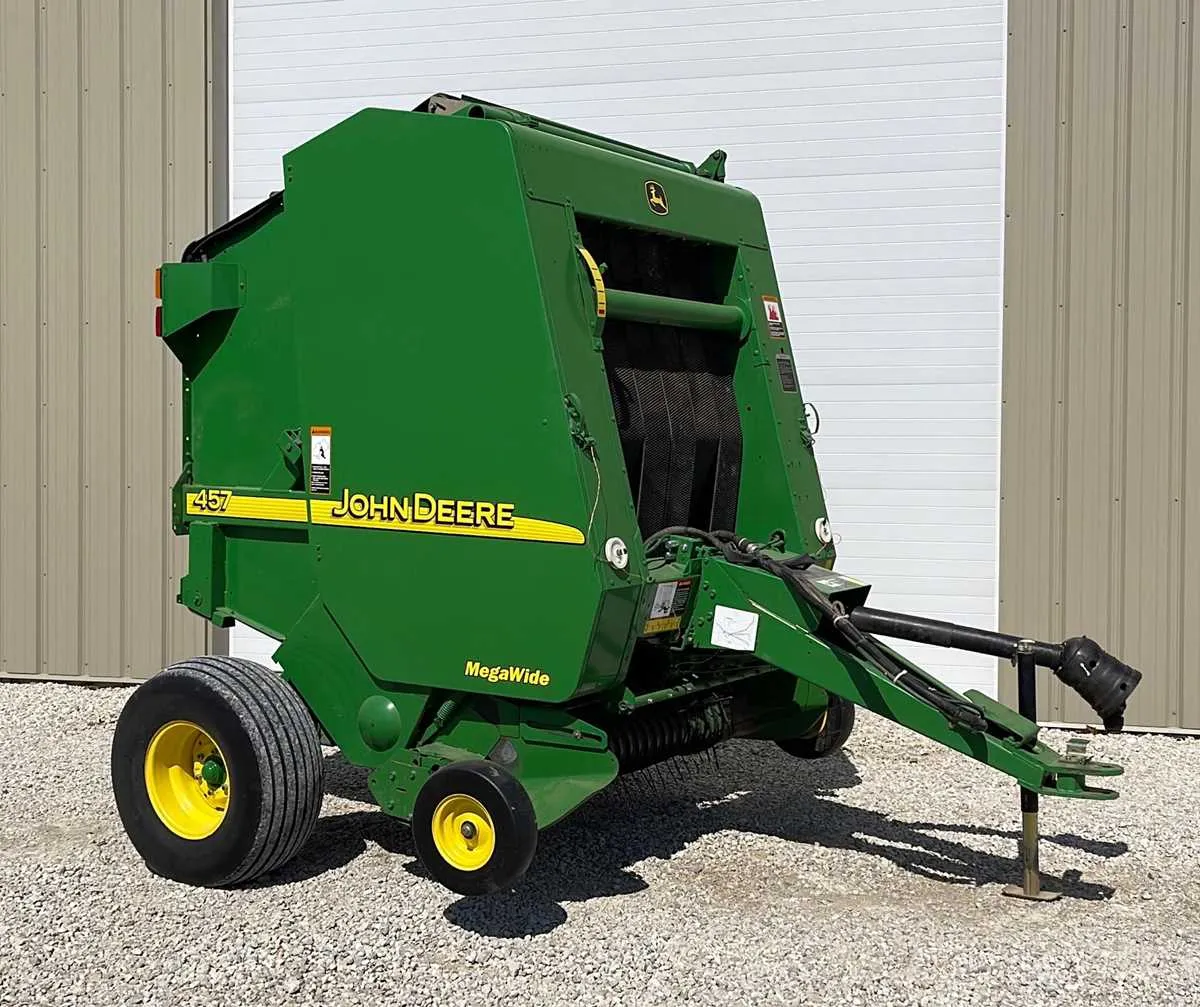
The John Deere 457 baler is designed to handle heavy-duty baling operations efficiently. With its robust build and advanced technology, this baler ensures smooth operation across different types of crops, including hay and straw. Equipped with a high-capacity rotor, it creates tight, uniform bales every time.
Featuring a bale size range from 14 x 18 inches to 5 x 6 feet, the 457 offers versatility for various farming needs. It’s powered by a strong 100 hp (75 kW) tractor, ensuring a consistent bale formation even in demanding conditions. The net wrap system provides secure and tidy bales that are ready for storage or transport, minimizing handling time.
With the added benefit of an automatic lubrication system, maintenance is kept to a minimum, allowing more time for operation. The 457 baler also incorporates a simple hydraulic system for easy adjustments to bale density, providing flexibility for different crop types and moisture levels.
John Deere 457 Baler Specs
The John Deere 457 Baler stands out with its reliable performance and robust features, making it an excellent choice for those who prioritize durability and ease of use in their hay baling operations.
Dimensions: The 457 Baler has an overall width of 7.9 feet (2.4 meters) and stands at a height of 9.1 feet (2.77 meters). This compact size allows for efficient maneuvering on tight fields.
Ball Size: It produces large round bales with a diameter ranging from 4.5 to 5.5 feet (1.37 to 1.68 meters) and a width of 4 feet (1.22 meters). This size is ideal for heavy-duty baling while maintaining ease of handling and transport.
Pickup Width: With a pickup width of 5.5 feet (1.68 meters), it ensures fast and efficient collection of hay, minimizing losses and improving work productivity.
Pressing Mechanism: The John Deere 457 uses a variable core density system, which allows for flexible bale formation. It’s equipped with a 2.2-meter wide pickup, along with a durable, highly-efficient cam-track design that ensures smooth and consistent baling without clogging.
Drive System: Powered by a PTO drive, the baler requires a tractor with at least 90 horsepower. The baler’s compact design and reliable drive system ensure that even during long hours of operation, it delivers the performance expected from a John Deere machine.
Net Wrap System: The integrated net wrap system provides superior bale coverage, ensuring that the bales hold their shape during storage and transport. This system is highly efficient, reducing the need for manual adjustments and minimizing material waste.
Weight: The baler weighs around 3,000 pounds (1,360 kilograms), a solid weight that supports its stability during operation while also keeping it portable for transport between fields.
Maintenance: Regular maintenance on the John Deere 457 is straightforward, with accessible lubrication points and a user-friendly control panel that allows for quick diagnostics. The design minimizes downtime by simplifying the upkeep process.
For operations requiring a balance of power and simplicity, the John Deere 457 Baler is a solid investment. Its straightforward operation, robust specs, and efficient design make it a go-to for hay producers who need reliable equipment in the field.
John Deere 457 Baler: Key Dimensions and Weight
The John Deere 457 Baler has the following key dimensions and weight:
Length: 12.5 feet (3.81 meters)
Width: 7.5 feet (2.29 meters)
Height: 8.5 feet (2.59 meters)
Weight: 4,550 pounds (2,065 kg)
This baler is designed for efficiency and ease of use, with a robust build to handle heavy workloads. The compact size ensures it is versatile for different field sizes, while the weight provides stability during operation. These specifications contribute to the baler’s durability and reliable performance, especially in dense crops.
The dimensions allow for easy maneuverability and transport, while the weight distribution is optimized to ensure consistent bale quality throughout the process.
John Deere 457 Baler: Bale Size and Density Adjustments
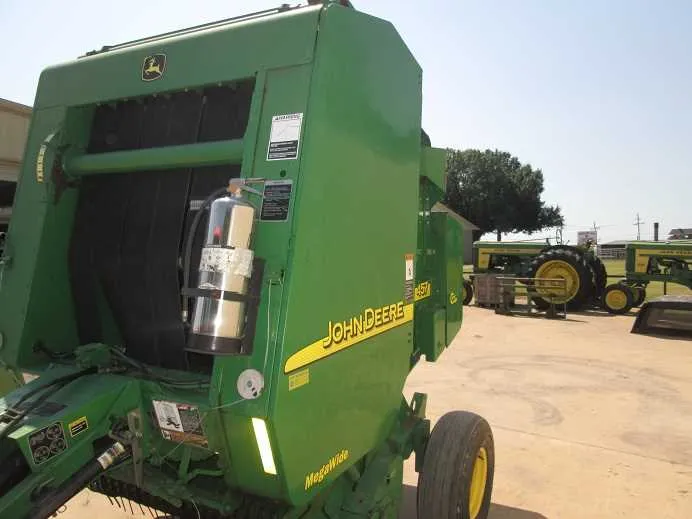
To adjust bale size and density on the John Deere 457 Baler, follow these steps for optimal results:
- Bale Size: Set the bale diameter by adjusting the bale chamber’s tension system. Use the hydraulic system to modify the bale size, ranging from 4’ x 5’ (1.2m x 1.5m) to 4’ x 6’ (1.2m x 1.8m).
- Bale Density: For denser bales, increase the pressure in the bale chamber. This is done by adjusting the density system, which utilizes hydraulic pressure to compress the material more tightly.
- Opti-Bale Technology: The John Deere 457 features an advanced system that automatically adjusts to achieve optimal bale density, reducing the need for manual changes and improving consistency in bale production.
- Monitor Settings: Use the in-cab monitor to fine-tune bale size and density. The monitor provides real-time feedback on bale formation, making it easier to adjust settings for different crop conditions.
- Crop Type Considerations: Different crops may require slight adjustments to the settings. For instance, hay might need slightly lower pressure for looser bales, while straw will benefit from higher pressure for a denser, more compact bale.
For the best performance, make adjustments based on your specific field conditions, crop type, and desired bale characteristics. Proper maintenance of the bale chamber and pressure system also ensures consistent performance over time.
John Deere 457 Baler: PTO Power Requirements and Engine Compatibility
The John Deere 457 baler requires a minimum PTO horsepower of 55 for optimal performance. For smooth operation, a tractor with a PTO rating of 60-70 horsepower is recommended. This ensures the baler runs efficiently, allowing it to handle heavier hay and higher bale densities without overloading the tractor’s engine.
When selecting an engine to pair with the 457 baler, it’s critical to ensure the tractor’s engine is both powerful and capable of maintaining consistent output. A tractor with an engine rated at least 75 horsepower will provide the necessary torque to drive the baler and maintain steady performance even during intensive work periods.
For best results, use a tractor that matches or exceeds the PTO power requirements of the 457 baler. Avoid underpowered engines, as they can cause the baler to operate inefficiently, potentially leading to system stress or premature wear. If your tractor falls within the recommended power range, it will perform well across various field conditions without sacrificing productivity or fuel economy.