John Deere 6930 Specifications and Key Features
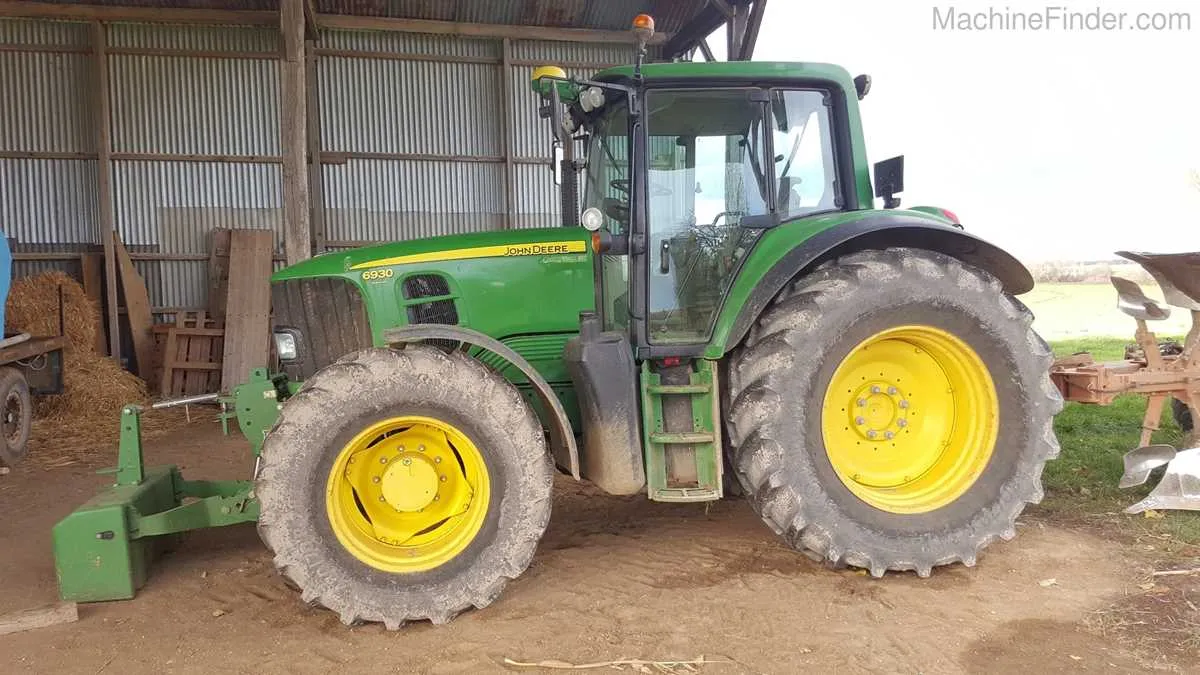
The John Deere 6930 is equipped with a powerful engine that delivers optimal performance for heavy-duty tasks. With a 6-cylinder engine producing 155 horsepower, it provides the torque necessary for demanding agricultural operations. The 6930’s 40km/h transmission ensures smooth driving across various terrains, enhancing productivity on the field.
With a hydraulic system designed for high-efficiency, the 6930 supports various attachments with ease. Its impressive lifting capacity of up to 4,400 kg allows operators to tackle a range of tasks, from tilling to heavy lifting. The tractor’s advanced suspension system ensures both comfort and stability, reducing operator fatigue during long working hours.
Designed for durability, the John Deere 6930 features robust components capable of handling extended use. Regular maintenance checks should focus on monitoring the engine oil, air filters, and hydraulic fluid to maintain peak performance. Additionally, the tractor’s spacious cabin is designed with operator comfort in mind, featuring excellent visibility and adjustable seating to accommodate long shifts.
John Deere 6930 Specifications
The John Deere 6930 is equipped with a 6-cylinder, turbocharged engine that provides an impressive 155 horsepower. This power output is supported by a reliable 6.8-liter engine capacity, offering sufficient strength for various field tasks.
The tractor’s transmission features a 16F/16R PowerQuad Plus system, allowing for smooth gear shifts while maintaining optimal power during operation. The hydraulic system has a flow rate of 110 liters per minute, providing strong performance for lifting and other attachments.
In terms of dimensions, the John Deere 6930 measures 4.56 meters in length, 2.55 meters in width, and stands at 3.05 meters tall with the cab in place. Its wheelbase of 2.67 meters helps balance maneuverability with stability on uneven terrain.
The maximum lifting capacity of the rear hitch is 4,500 kg, making it suitable for heavy-duty tasks, such as plowing or hauling large implements. The fuel tank has a capacity of 190 liters, offering enough range for extended work periods without frequent refueling.
This model’s tire size varies, but the standard configuration typically includes 480/70R34 tires on the rear and 380/70R24 on the front. These tire sizes improve traction while minimizing soil compaction during operation.
Engine and Performance Details of the John Deere 6930
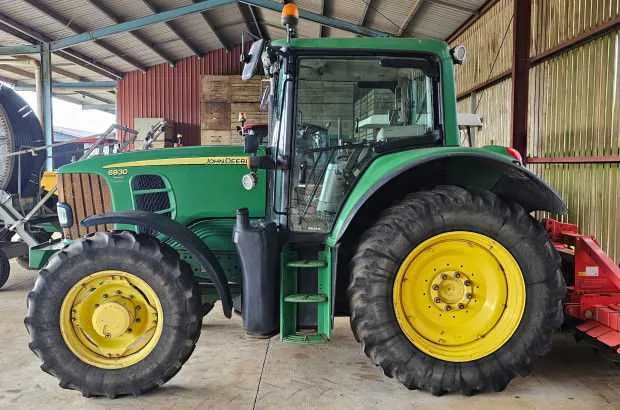
The John Deere 6930 is equipped with a robust 6.8L, 6-cylinder engine, designed to provide consistent power for demanding tasks. With a rated output of 155 horsepower at 2200 RPM, this engine ensures optimal performance in various agricultural and construction operations.
The engine’s performance is enhanced by a turbocharged design that offers an efficient power-to-fuel consumption ratio. It can reach a maximum torque of 600 Nm at 1500 RPM, which delivers ample low-end torque for heavy-duty tasks such as plowing and hauling.
Equipped with a PowerTech Plus engine system, the John Deere 6930 excels in fuel efficiency, ensuring longer operating hours without frequent refueling. This makes it an ideal choice for large-scale operations that require both power and reliability.
- Engine Type: 6.8L 6-Cylinder Turbocharged
- Rated Output: 155 HP @ 2200 RPM
- Maximum Torque: 600 Nm @ 1500 RPM
- Fuel Tank Capacity: 270L
- Transmission: 16 Forward / 4 Reverse gears
The performance of the John Deere 6930 is supported by a 16-speed transmission, which allows for smooth transitions between gears, optimizing power delivery. The combination of engine power and transmission offers excellent maneuverability and control, even under heavy load conditions.
This tractor also features an advanced cooling system, ensuring that the engine operates at optimal temperatures even during long hours of work. The cooling system helps prevent overheating and extends the lifespan of engine components.
Dimensions and Maneuverability of the John Deere 6930
The John Deere 6930 measures 4,695 mm in length, 2,550 mm in width, and 2,880 mm in height, offering a balanced size for a range of agricultural tasks. With a wheelbase of 2,620 mm, the tractor ensures solid stability during fieldwork and transport. The ground clearance of 455 mm allows the machine to handle uneven terrain with ease.
Its turning radius of 5.5 meters helps optimize maneuverability, especially in tighter spaces or when working around obstacles. The tractor is equipped with a power steering system, making it easier to control, even during prolonged use or while performing sharp turns.
For those requiring frequent transport between locations, the John Deere 6930’s compact dimensions allow it to navigate narrow roads and tight corners without compromising performance. Its size-to-power ratio makes it highly maneuverable, increasing efficiency in operations where precision is key.
Maintenance Guidelines and Service Intervals for the John Deere 6930
Change the engine oil every 500 hours or annually, whichever comes first. This ensures proper lubrication and extends the engine’s lifespan.
Inspect the air filter regularly, at least every 250 hours of operation. Replace it if clogged or damaged to maintain optimal engine performance.
Grease all pivot points and joints every 50 hours to prevent wear and ensure smooth operation of the moving parts.
Check the tire pressure every 100 hours to avoid uneven wear and ensure safe handling. Maintain the pressure within the recommended range, typically between 1.6 and 1.9 bar (23-28 psi).
Inspect the cooling system every 250 hours. Clean the radiator and check for any debris or blockages that could impede airflow, reducing cooling efficiency.
Change the fuel filter every 500 hours. A clean filter is crucial to prevent contaminants from entering the engine and affecting performance.
Replace the hydraulic oil and filter every 1,000 hours. Use the specified hydraulic fluid to ensure proper operation of the hydraulic system and avoid damage to pumps and valves.
Check the battery’s condition regularly, especially after long periods of inactivity. Clean the terminals and ensure the battery is properly charged.
Every 1,000 hours, inspect the belts, hoses, and cables for signs of wear or cracks. Replace any damaged parts promptly to avoid breakdowns during operation.
Ensure regular inspection of the brakes and clutch at least every 500 hours. Adjust and replace components as necessary to maintain optimal stopping power and safety.