Specifications of the John Deere 790 Tractor and Key Features

The John Deere 790 tractor is equipped with a 30 horsepower engine, making it suitable for various tasks, from light farming to landscaping. The 790 model features a 4WD option, which provides improved traction in tough terrains. For operators looking for versatility, it offers multiple transmission choices, including a 9-speed transmission for better control over speed and power delivery.
With a rear lift capacity of up to 1,100 pounds, the 790 is built to handle a range of attachments like plows, mowers, and loaders. It’s an ideal option for those who need a durable, reliable machine for moderate agricultural or utility jobs. The hydraulics system of the John Deere 790 has been designed for efficient performance, providing steady power to run implements without compromising speed or control.
For maintenance, the John Deere 790 is straightforward. Regular oil and filter changes are recommended every 100 hours of operation to keep the engine running smoothly. The cooling system requires periodic checks to avoid overheating during long working hours, especially when operating at full capacity.
John Deere 790 Tractor Specifications
The John Deere 790 is powered by a 30-horsepower Yanmar diesel engine, delivering a reliable performance for a variety of agricultural tasks. It features a 3-cylinder engine with a liquid-cooled system, ensuring smooth operation under heavy loads and in various weather conditions.
The tractor’s transmission offers 9 forward speeds and 3 reverse speeds, providing flexibility for both slow and high-speed operations. It comes with a synchro-range transmission that ensures smooth shifting, allowing for better control when working on slopes or tight areas.
With a 4WD option, the John Deere 790 ensures excellent traction on uneven or muddy terrain, making it ideal for both light and heavy-duty applications. The maximum lift capacity of the rear three-point hitch is 1,190 lbs, which is suitable for medium-sized implements.
It is equipped with a hydraulic system that offers a flow rate of 6.5 gpm, ensuring efficient attachment usage and quick response times. The fuel tank holds 11.5 gallons, providing sufficient range for long hours of work in the field without frequent refueling.
The tractor’s compact design, with a wheelbase of 63 inches and an overall width of 49.5 inches, makes it highly maneuverable in smaller spaces. The turning radius of 9.5 feet ensures tight turns, perfect for working in confined areas or around obstacles.
Maintenance intervals for the John Deere 790 are standard for this class of tractor, with oil changes recommended every 100 hours of operation or once a year, whichever comes first. Regular maintenance ensures optimal engine performance and extends the life of the tractor.
Engine Performance and Power Output
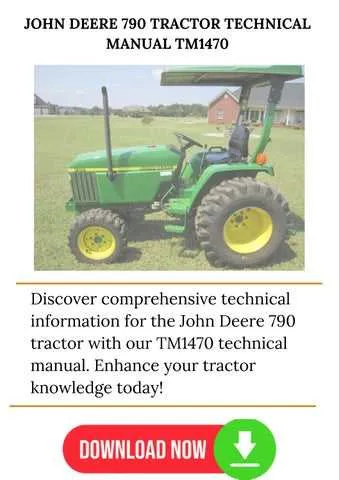
The John Deere 790 is equipped with a 4-cylinder, 1.5L diesel engine, providing a solid power output for various farming and light-duty tasks. With a rated power of 24.7 horsepower at 2,600 RPM, this engine ensures reliable and consistent performance for both small and medium-sized jobs.
For tasks that demand higher torque, the engine delivers 44.6 lb-ft at 1,500 RPM. This allows for efficient handling of heavier implements without compromising on performance. The engine’s 3-range transmission system complements its power output, offering smooth shifts for a wide variety of operations.
Additionally, the engine’s fuel efficiency makes it an economical choice for long hours of work. It has a fuel tank capacity of 12.1 gallons, providing an excellent balance between range and fuel consumption.
Engine maintenance is straightforward, and regular intervals help maintain peak performance. The tractor’s cooling system is designed to handle heavy-duty use, ensuring that the engine operates at optimal temperatures even under strenuous conditions.
Hydraulic System Features and Capacities
The John Deere 790 features a high-performance hydraulic system designed to maximize efficiency. The system uses a single, gear-driven pump that provides 7.8 gallons per minute (GPM) of flow, ensuring smooth operation under various load conditions.
For the hydraulic fluid reservoir, the John Deere 790 holds 5.3 gallons, offering enough capacity to handle demanding tasks while keeping the system running at optimal temperatures. The system’s pressure relief valve is set to a maximum of 2,200 psi, providing the necessary force for effective operation without compromising the system’s integrity.
The three-point hitch system is capable of lifting up to 1,200 pounds, which supports a variety of implements. Additionally, the auxiliary hydraulics are available to power external attachments, further enhancing the tractor’s versatility.
Proper maintenance of the hydraulic system is critical. It’s recommended to check fluid levels regularly and replace the hydraulic filter every 400 hours or once per year, whichever comes first. This ensures longevity and performance reliability, particularly when using heavy attachments or operating in challenging conditions.
Maintenance and Service Intervals for Longevity
Regular maintenance ensures the long-term performance of the John Deere 790 tractor. Adhering to service intervals minimizes downtime and prevents costly repairs.
- Engine Oil Change: Change the engine oil and filter every 100 hours of operation or at least once a year, whichever comes first. This keeps the engine running smoothly and prevents wear.
- Air Filter Maintenance: Inspect the air filter every 50 hours and replace it if it appears clogged or damaged. Clean it periodically to ensure optimal air flow to the engine.
- Hydraulic Fluid: Replace hydraulic fluid every 500 hours to maintain hydraulic system performance. Clean the filter and inspect hoses for any signs of wear at the same time.
- Fuel System: Replace the fuel filter every 200 hours or annually. Inspect fuel lines and connections to avoid leaks or blockages.
- Tire Pressure: Check tire pressure regularly, ideally every 50 hours. Correct tire pressure prevents uneven wear and optimizes fuel efficiency.
- Battery Maintenance: Inspect the battery every 100 hours for corrosion and fluid levels. Clean terminals and top up the electrolyte as necessary to ensure reliable starts.
- Cooling System: Flush the cooling system and replace coolant every 500 hours or annually. Regular inspection of the radiator and hoses ensures effective heat dissipation.
Following these intervals helps to avoid costly repairs and keeps the tractor in optimal working condition for years. Make sure to follow the manufacturer’s specific recommendations for all maintenance tasks.