John Deere 750 No Till Drill Specifications and Features for Efficient Planting

The John Deere 750 No Till Drill offers impressive specifications that make it a go-to for farmers looking to maximize planting efficiency while minimizing soil disruption. This model features a wide working width, precise seed placement, and the ability to plant directly into residue, making it ideal for no-till operations.
Equipped with a durable frame and robust components, the 750 No Till Drill is designed to handle a variety of soil types and conditions. With a 10- to 15-foot working width, it ensures that large fields can be covered quickly without compromising seed depth accuracy. Its double-disc opener provides excellent penetration, ensuring consistent seed placement in both wet and dry conditions.
For operators seeking reliability and ease of use, the drill comes with simple depth control mechanisms and seed metering systems that are easy to adjust. The seedbox capacity varies by configuration, with larger tanks available for extended planting runs. This makes it well-suited for both small and large-scale farming operations looking to reduce downtime and improve planting productivity.
Whether you’re planting crops like corn, soybeans, or wheat, the John Deere 750 No Till Drill ensures minimal soil disruption, maintaining moisture and organic matter while enhancing soil health. The heavy-duty construction, combined with precision planting technology, guarantees that it delivers reliable results season after season.
John Deere 750 No Till Drill Specs
The John Deere 750 No Till Drill is a highly durable and precise tool, designed for efficient planting in challenging soil conditions. With a working width ranging from 10 to 20 feet, it covers large areas quickly, while the individual opener assemblies ensure consistent seed placement.
The drill operates at a depth range of 0.75 to 2.5 inches, allowing flexibility in various soil types. The hydraulic downforce system provides precise control, maintaining optimal pressure on the openers regardless of soil conditions. The drill features a seed metering system capable of handling various seed types, from small grains to larger seeds like soybeans.
The 750 is equipped with a double disc opener system, reducing soil disturbance and ensuring excellent seed-to-soil contact. This system also helps reduce the likelihood of seed being buried too deep or too shallow. The drill is built with heavy-duty components, designed to endure high wear in tough environments, making it a reliable choice for no-till operations.
Its transport width is about 10 feet, and it folds easily for road travel, making it suitable for both small and large-scale operations. For additional flexibility, it can be equipped with a range of attachments, including a press wheel option, which helps improve seed-to-soil contact for better germination rates.
Overall, the John Deere 750 No Till Drill is designed for maximum planting efficiency with minimal soil disruption, perfect for operators looking for a machine that can handle various field conditions while offering easy maintenance and long-term durability.
Understanding the Working Width and Depth Range of the John Deere 750 No Till Drill
The John Deere 750 No Till Drill offers a flexible working width and depth range to accommodate a variety of planting needs. When selecting the right settings, focus on these key parameters to maximize efficiency.
The working width of the John Deere 750 No Till Drill is available in two primary configurations: 10 feet (3 meters) and 15 feet (4.6 meters). The 10-foot version is ideal for smaller fields or areas with tighter spacing, while the 15-foot model allows for faster coverage of larger fields. Both versions are equipped with high-quality, durable openers designed to minimize soil disturbance during planting.
Adjusting the seed depth is another critical factor. The John Deere 750 offers an adjustable seed depth range from 1 to 2.5 inches (25 to 63 mm). This range ensures the proper placement of seeds, whether you’re working with shallow or deeper soil profiles. Shallow depth settings are ideal for more superficial seed placement, while deeper settings are more suitable for crops requiring greater soil contact for optimal germination.
The drill also features individual depth control for each row unit, which helps maintain consistent depth across uneven ground. This feature is especially useful in no-till farming, where ground conditions may vary significantly from one area to another. Adjusting the depth in each row unit ensures uniform seed placement and improves germination rates.
For maximum performance, it’s recommended to adjust the depth based on soil conditions and crop type. Lighter soils may require shallower seed placement, while heavier, clay-based soils might benefit from deeper settings to ensure proper seed coverage. Adjusting both the working width and depth range according to field conditions can greatly enhance planting efficiency and seedling development.
Key Features of the Seeder Boxes and Their Capacity on the John Deere 750
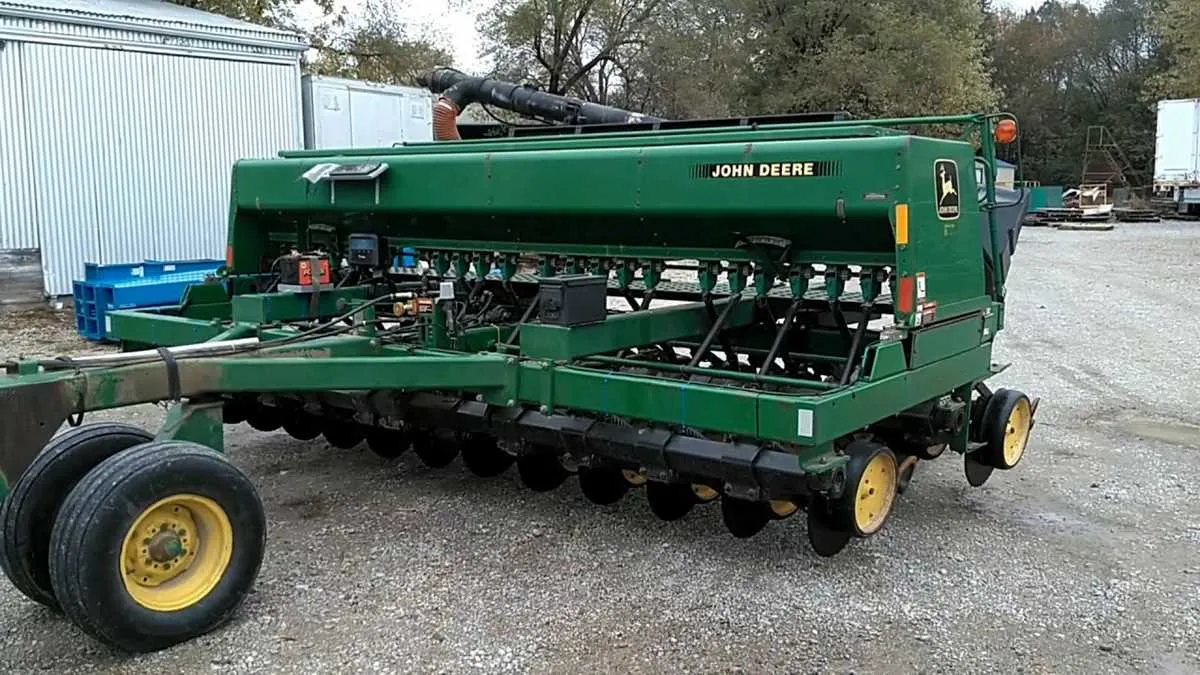
The John Deere 750 No-Till Drill features a well-designed seed box system, tailored to maximize planting efficiency. Each box is capable of handling different seed types, giving farmers the flexibility to adjust based on their needs. The seed boxes come in multiple configurations, offering both single and double compartments for various crops.
The individual seed box capacity on the John Deere 750 is approximately 5.5 bushels. This allows for large-scale planting operations without the need for constant refills, reducing downtime and ensuring a consistent planting rate. The precise metering system ensures that seeds are evenly distributed across the soil, regardless of the seed size or type.
The boxes also feature an easy-to-use calibration system. This helps operators quickly adjust the flow rate for different seeds, optimizing planting depth and spacing. With the ability to switch between crops without complicated setup processes, the John Deere 750 reduces the risk of human error and enhances seeding precision.
For those needing to plant a mix of seeds, the dual-compartment boxes offer flexibility, allowing for the separation of different seed varieties or the inclusion of fertilizer. This flexibility ensures that you can plant a variety of crops with minimal hassle while maintaining optimal seed-to-soil contact.
The seeder boxes are also designed for durability, with heavy-duty construction to withstand the wear and tear of continuous no-till farming. This durability, combined with the large capacity, makes the John Deere 750 a reliable choice for farmers looking to increase productivity without sacrificing seed quality.
Maintenance Tips for Maximizing Performance of the John Deere 750 No Till Drill
Regularly inspect and clean the seed openers. A build-up of dirt and debris can obstruct seed flow and reduce planting accuracy. Clean the openers after each use, especially in sticky or wet conditions, to avoid clogging.
Lubricate moving parts, such as the gauge wheels, depth control wheels, and row units. Use the manufacturer’s recommended grease and follow the intervals outlined in the operator’s manual to prevent wear and tear, ensuring smooth operation.
Monitor and adjust seed depth regularly. Over time, the depth control settings may shift. Verify the proper seed depth is maintained by checking the seed trench and adjusting as needed to optimize seed-to-soil contact.
Check the coulters for wear and replace them as necessary. Worn coulters can cause poor seed trench formation and uneven seed placement. Ensure that they remain sharp and properly aligned.
Inspect the tire pressure in the transport wheels. Incorrect tire pressure can lead to uneven pressure on the seed openers, causing inconsistent planting depth. Adjust tire pressure to the recommended levels for uniform performance.
Replace worn-out or damaged seed tubes to maintain accurate seed delivery. Even minor cracks or misalignments in the seed tubes can cause seed spillage and uneven planting.
Ensure the hydraulic system is functioning properly. Inspect hoses, fittings, and cylinders for leaks or damage, and regularly check hydraulic fluid levels to maintain proper operation of the drill.
Regularly calibrate the fertilizer system. Fertilizer placement is critical for crop health, so ensure the system delivers the correct amount by performing regular checks and calibrations.
Check the frame and structure for any signs of stress or damage. A bent or cracked frame can cause misalignment of the seed units, leading to uneven planting. Tighten loose bolts and address structural issues promptly.
Keep the drill’s monitor system updated. Regular software updates ensure accurate data tracking and help identify performance issues before they affect planting efficiency.