John Deere 1870 76 Air Hoe Drill Specifications Including Width and Capacity
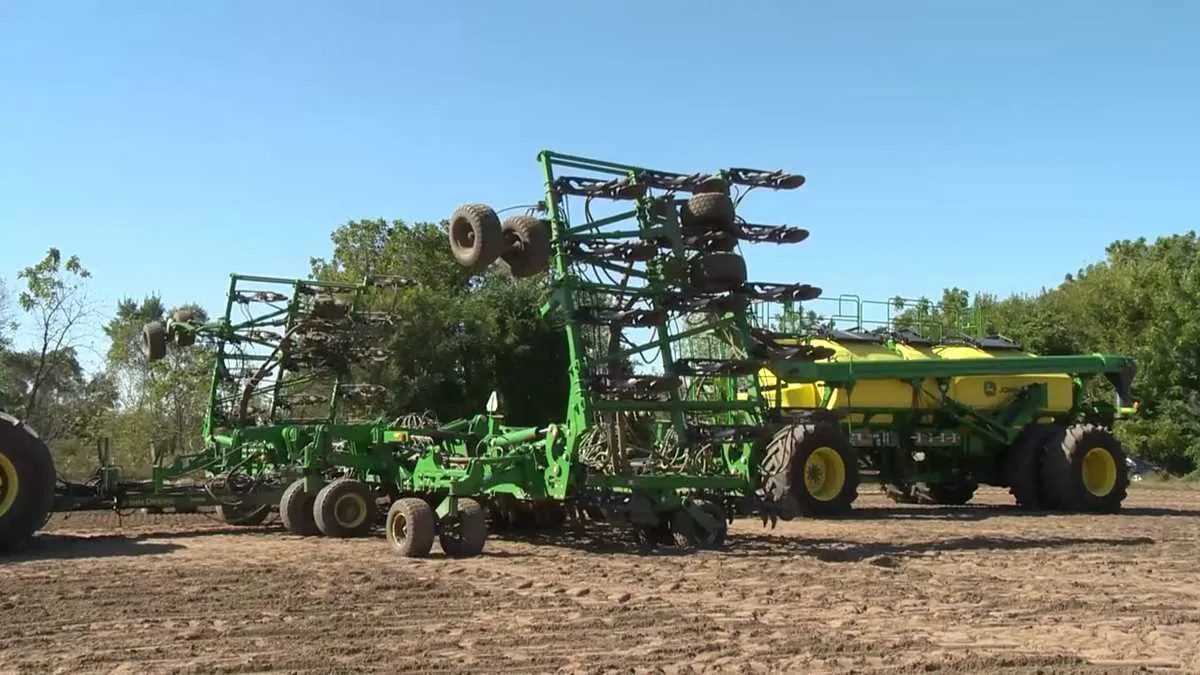
Choose the 76-foot John Deere 1870 Air Hoe Drill if you need precise seed and fertilizer placement over wide fields with reduced passes. This model delivers 76 feet of working width with 12-inch spacing and features 76 primary openers. It suits operations seeking high-efficiency seeding while maintaining consistent depth control across diverse soil conditions.
The 1870 76 includes a five-section frame that flexes with the terrain, reducing frame stress and improving ground following. Its high-flotation 800/70R38 tires reduce compaction, and the Total Seeding Solution ensures accuracy through SectionCommand and RelativeFlow blockage monitoring. The 76-row version pairs optimally with the C850 air cart for high-capacity coverage and fewer refills per day.
Field-tested transport width is 22.5 feet, while folded height reaches 18.5 feet. Transport configuration uses a rear-folding design and an integrated lift-assist system to ensure balance and safety. Hydraulic requirements reach up to 84 gpm depending on tractor compatibility and usage of active downforce or blockage monitoring features.
John Deere 1870 76 Specs Detailed Overview for Practical Use
Choose the 76-foot John Deere 1870 air hoe drill when you need precise seed placement across wide working widths. This configuration supports 76 feet of seeding coverage with 12-inch spacing, enabling faster field operations with consistent crop emergence.
The 1870 features a five-section frame with flex capability of up to 25 degrees, maintaining ground contact on uneven terrain. The seeding system includes 400 lb trip force, active hydraulic downforce adjustment, and paired row fertilizer placement, helping you maintain target depth and reduce variability in emergence.
For transport, the 76-foot model folds down to a width of approximately 22 feet and a height of under 15 feet, allowing movement between fields without escort. Each section uses durable cast components and welded joints to withstand high-stress operation in heavy residue conditions.
Pair the drill with the C850 Air Cart to utilize its 850-bushel capacity split across four tanks, giving flexible seeding and fertilizer blends. Optional SectionCommand technology reduces overlap by controlling product flow on each section independently, minimizing input waste.
Recommended tractor power exceeds 500 hp to manage both the 76-foot toolbar and a fully loaded air cart on rolling or wet ground. Hydraulic requirements include up to 79 gpm flow capacity, especially if running active downforce and section control simultaneously.
Routine maintenance is simplified with centralized grease banks, wide service platforms, and single-point depth control. Daily checks on opener arms, packer wheels, and hydraulic fittings keep the machine running smoothly across full-day shifts.
Use the 1870 76-foot setup for cereals, canola, soybeans, and legumes in high-acreage operations where time, coverage, and uniformity directly affect yield potential and profitability.
Frame Widths, Row Spacing, and Folding Mechanism Specifications
Choose the 76-foot John Deere 1870 for wide coverage with consistent performance. This model supports working widths from 76 ft (23.2 m), offering excellent field efficiency for large-acreage operations. It provides row spacing options of 10 inches (254 mm) and 12 inches (305 mm), making it suitable for various crop types and residue management needs.
The frame width allows for multiple-section flexibility, improving ground contour following. The machine folds to a transport width of 18 ft 10 in (5.74 m) and a height of 16 ft 2 in (4.93 m), ensuring stable road transport. Hydraulic controls automate the folding process, and locking mechanisms secure the wings during movement. No need for manual intervention between field and transport modes.
To maximize uptime, check the wing hinge pivots and hydraulic cylinders every 250 hours. Grease all folding points regularly, especially during high-dust seasons. Use only ISO-compliant hydraulic couplers to maintain safe folding operations and avoid system pressure leaks.
Seeder Tank Capacity Distribution System and Section Control Features
Choose the 76-foot John Deere 1870 with a factory-paired C850 Air Cart to access a total seeding capacity of 850 bushels, split across three primary tanks and an optional auxiliary tank:
- Main front tank: 350 bushels
- Middle tank: 300 bushels
- Rear tank: 200 bushels
- Optional auxiliary tank: 50 bushels (ideal for micronutrients or inoculants)
Distribute multiple seed types or fertilizer blends across the tanks using the stainless steel, pressurized metering system. The cart supports variable-rate application for each tank independently, ensuring precise nutrient placement and seed metering across varying soil zones.
Use the SectionCommand™ feature to eliminate overlap and save input costs. It controls up to 8 primary sections, reducing double seeding in wedge-shaped fields and irregular headlands. Each section operates via individual electric clutches on the metering augers, with section status managed directly from the Gen 4 display in the cab.
Pairing the 1870 with the C850 also enables in-frame sectional distribution thanks to the modular primary manifold. This layout supports uniform flow even at higher rates, particularly useful in variable-rate prescription applications across wide widths.
For optimal product flow, maintain fan speed within 4,500–5,000 rpm when distributing granular fertilizer at high rates. Use the in-tank load cells to calibrate product metering from the cab without manual sampling, streamlining setup during field changes.
Compatibility with Tractors, Transport Dimensions, and Field Requirements
Match the John Deere 1870 76-foot air hoe drill with a tractor delivering at least 500 engine horsepower and 58 GPM hydraulic flow. This ensures consistent performance across various soil types and operating speeds. Use tractors equipped with Category 5 drawbars and implement guidance systems to maintain alignment and reduce draft in wide seeding passes.
Ensure road transport compliance by checking width and height with wings folded. The 76-foot model folds down to approximately 23 ft (7 m) wide and 15 ft (4.6 m) high. Transport length can reach 65 ft (19.8 m), depending on configuration. Confirm local regulations for maximum legal transport dimensions and lighting requirements.
Prepare fields with sufficient headlands for safe turning. The 1870 requires a minimum turning radius of approximately 95 ft (29 m), which increases with tow-between carts. Avoid narrow gates or field entrances below 24 ft (7.3 m) when maneuvering into position.
| Specification | Value |
|---|---|
| Recommended Tractor Power | 500+ HP |
| Hydraulic Flow Requirement | 58 GPM minimum |
| Transport Width (folded) | ~23 ft (7 m) |
| Transport Height (folded) | ~15 ft (4.6 m) |
| Transport Length | ~65 ft (19.8 m) |
| Turning Radius | ~95 ft (29 m) |
| Minimum Gate/Entrance Width | 24 ft (7.3 m) |
Check tire pressures and ballast settings before transport. Reduce speed on uneven terrain to avoid frame stress. Use the active hydraulic wing-downforce system to maintain consistent soil contact during seeding, especially on contours or variable topography.