John Deere 2305 Specifications and Key Features for Performance and Durability
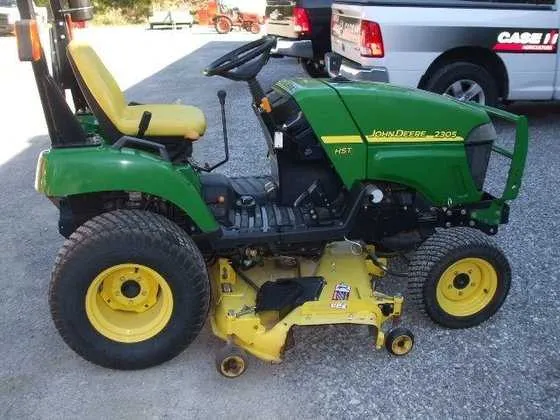
The John Deere 2305 is a compact utility tractor designed for small farming, landscaping, and residential tasks. Its 24.2 horsepower engine offers ample power for light-duty work, while its 4WD system ensures excellent traction on uneven terrain. This machine balances power with size, making it an ideal choice for those needing versatility in tight spaces.
The tractor features a 2-range hydrostatic transmission, providing smooth operation for varying tasks, from mowing to hauling. The standard 3-point hitch allows for easy attachment of implements like plows and rotary cutters, enhancing productivity. Its 23.5-litre fuel tank ensures long operational periods without constant refueling, an important factor for efficiency in daily tasks.
With a lift capacity of up to 680 kg, the 2305 can handle a range of attachments and workloads. The 60-inch mid-mount mower deck is built to provide a precise and clean cut, while the 4-wheel drive guarantees optimal performance on both flat and hilly terrain. These specifications make the John Deere 2305 a dependable choice for various property management and agricultural projects.
John Deere 2305 Tractor Specifications
The John Deere 2305 is a compact tractor designed to handle a wide range of tasks with reliability and ease. With its strong engine and versatile features, it stands out in the sub-compact tractor category.
The tractor is powered by a 24.2 hp (17.7 kW) diesel engine, featuring a 3-cylinder configuration. This engine provides sufficient power for demanding jobs such as mowing, tilling, or hauling. The engine also incorporates a liquid cooling system, ensuring optimal performance under heavy use.
The transmission system on the 2305 is a hydrostatic type, offering infinite speed control. This system simplifies operation, allowing smooth transitions between forward and reverse speeds without the need for shifting gears manually. The tractor also has a two-range transmission, enhancing versatility in various working conditions.
The 2305’s lift capacity is impressive, with a rear lift capacity of 680 lbs (308 kg) and a front lift capacity of 430 lbs (195 kg). This makes it suitable for lifting and moving heavier materials or equipment, whether it’s a mower deck or a plow. The 3-point hitch at the rear and the mid PTO ensure compatibility with a wide range of attachments, boosting its utility.
With a 4WD drivetrain, the John Deere 2305 offers stability and traction on uneven terrain. Its low center of gravity improves maneuverability, making it ideal for landscaping, gardening, and light farming tasks. The tight turning radius enhances its ability to work in confined spaces.
Fuel efficiency is another standout feature, with the 2305 boasting a fuel tank capacity of 6.5 gallons (24.6 L). This allows for longer operational hours without frequent refueling. The ergonomic controls and easy-to-read dashboard provide user-friendly operation, minimizing operator fatigue.
At just 2,100 lbs (953 kg), the John Deere 2305 is lightweight compared to many other tractors in its class, which makes it easy to transport and store. Despite its compact size, it delivers a remarkable combination of power, precision, and efficiency, making it a solid choice for small-scale farming, property maintenance, or hobby farming.
Engine Performance and Power Output of the John Deere 2305
The John Deere 2305 is powered by a 1.1L, 3-cylinder, liquid-cooled diesel engine. This engine delivers 24.5 horsepower, providing enough strength for demanding tasks like mowing, tilling, and light hauling. The engine’s smooth operation is backed by a strong torque curve, ensuring consistent performance even in tough conditions.
With a rated engine speed of 3,000 RPM, the 2305 exhibits excellent fuel efficiency while maintaining power. The engine is designed for durability, offering long intervals between maintenance and making it a reliable choice for homeowners and small farm owners.
The engine’s power output allows the John Deere 2305 to operate a range of attachments, from mid-mount mowers to front loaders, without compromising performance. Its high torque-to-weight ratio makes it well-suited for tasks requiring precision and sustained power delivery.
Additionally, the John Deere 2305’s powertrain is optimized to ensure smooth transitions between gears, enhancing its overall handling and ease of use. This balance between engine performance and operational efficiency makes it a versatile and dependable machine for a variety of tasks.
Transmission Options and Handling Features of the John Deere 2305
The John Deere 2305 offers two key transmission options: the hydrostatic transmission (HST) and the gear drive. Each option delivers distinct handling capabilities to suit different tasks and operator preferences.
The HST provides smooth, efficient control of speed and direction without the need for clutching or shifting gears. Operators can easily adjust speed with a foot pedal, making it ideal for tasks that require frequent speed changes, such as mowing or material handling. The HST is particularly helpful in tight spaces where quick directional changes are needed.
The gear drive transmission offers more direct power delivery, ideal for those who prefer a more traditional approach to operation. With this option, you manually shift between gears, which provides a more consistent speed range when working with heavier loads or on more stable ground conditions. It requires a bit more attention and skill, but it can be beneficial for those who need more control over power output.
For handling, the John Deere 2305 is equipped with a tight turning radius and responsive steering, allowing operators to maneuver with ease around obstacles and in confined spaces. The power steering feature ensures effortless turning, even when the tractor is fully loaded or when navigating rough terrain.
- Hydrostatic Transmission (HST): Simple to use, ideal for variable tasks and easy directional changes.
- Gear Drive Transmission: More control for heavy-duty tasks and stable speed management.
- Power Steering: Makes turning smoother and reduces effort, especially in tough working conditions.
- Tight Turning Radius: Excellent maneuverability for precise handling in tight areas.
Both transmission options cater to different needs, ensuring that operators can select the most suitable one for their specific tasks. The handling features of the 2305 offer comfort and precision, making it a versatile choice for various applications.
Maintenance Requirements and Service Intervals for John Deere 2305
The John Deere 2305 requires regular servicing to maintain its performance and longevity. Here’s a detailed breakdown of its maintenance needs:
Every 50 hours, check and replace the engine oil and filter. This helps prevent excessive wear and ensures smooth operation. Be sure to use the recommended oil type for optimal engine performance.
At 100 hours, inspect the air filter. Replace it if it shows signs of damage or excessive dirt accumulation. A clean air filter ensures the engine receives adequate airflow, contributing to better fuel efficiency and performance.
For the transmission fluid, change it every 200 hours of operation. This interval helps maintain smooth gear shifting and extends the life of the transmission system.
At 400 hours, it’s time to inspect and clean the radiator. Debris buildup can affect the cooling system’s efficiency, leading to overheating. Keep the radiator clean to avoid costly repairs down the line.
Check the fuel system at 500 hours. This includes inspecting the fuel filter and lines for any cracks or blockages. Replacing the fuel filter at this interval helps avoid fuel system failures.
Inspect the hydraulic system every 500 hours, checking the hydraulic fluid levels and ensuring there are no leaks. Maintaining proper hydraulic fluid levels prevents damage to pumps and other hydraulic components.
For the battery, inspect it every 100 hours, looking for corrosion or signs of wear. Clean the terminals and check the voltage to ensure it’s operating at optimal levels.
Always follow the manufacturer’s recommendations in the operator’s manual for specific maintenance schedules. Adhering to these intervals helps avoid unplanned downtime and costly repairs.