Specifications of the John Deere 4120 Tractor
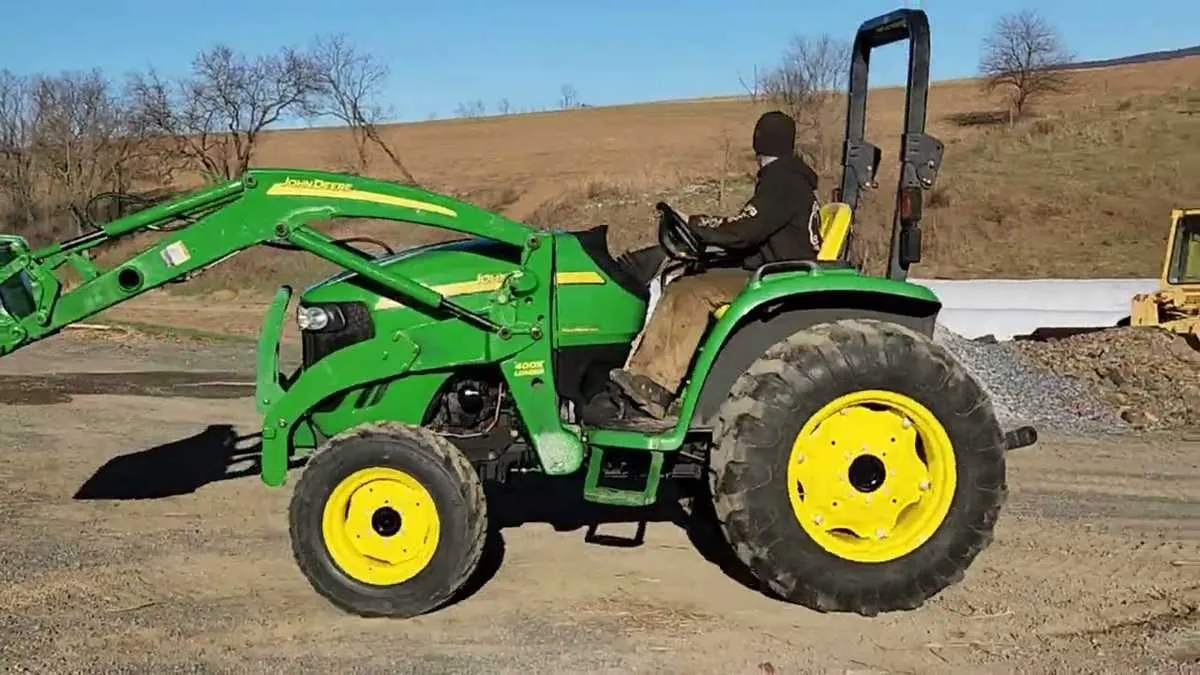
The John Deere 4120 is a highly versatile tractor, ideal for both agricultural and landscaping tasks. Equipped with a 46-horsepower engine, it delivers a robust performance suitable for a wide range of attachments and implements. The 4120 is known for its efficient fuel consumption and its ability to handle heavy workloads with ease.
The transmission system offers both hydrostatic and gear options, making it adaptable to various working conditions. The tractor’s compact size, combined with its advanced steering system, ensures excellent maneuverability in tight spaces, making it a great choice for small farms and residential properties.
With a lifting capacity of up to 1,500 pounds, the John Deere 4120 can handle a variety of implements, including front-end loaders and tillers. Its ergonomic design reduces operator fatigue, allowing for longer work hours without sacrificing comfort or control.
John Deere 4120 Tractor Specifications
The John Deere 4120 tractor is equipped with a 4-cylinder, 45-horsepower engine, designed to handle demanding tasks on small to medium-sized farms. It features a liquid-cooled system, providing optimal engine performance and longevity. The tractor has a hydrostatic transmission system, offering smooth and responsive control, ideal for various operations.
The 4120 model comes with a three-point hitch, capable of lifting up to 2,300 lbs, ensuring compatibility with a wide range of attachments. Its 540 RPM rear PTO delivers consistent power for operating implements such as mowers, tillers, and sprayers. The tractor’s fuel tank capacity of 13.7 gallons ensures extended operation before refueling is required.
In terms of dimensions, the John Deere 4120 has a length of 108 inches, a width of 56.5 inches, and a height of 84.6 inches, providing a balanced footprint for stability during operation. The tractor’s ground clearance is 12 inches, allowing for easy navigation over uneven terrain.
The 4120’s front-wheel drive system ensures traction and control on soft or uneven ground, while the rear-wheel drive offers efficient power transfer for most agricultural tasks. It also features a tight turning radius of 9.4 feet, making it highly maneuverable in confined spaces.
For operator comfort, the tractor includes a spacious, ergonomically designed cab with intuitive controls, a comfortable seat, and easy access to the steering wheel and pedals. This enhances productivity during long hours of operation.
Engine Power and Torque Details
The John Deere 4120 is equipped with a powerful 4-cylinder diesel engine. It generates a rated power output of 42.5 horsepower at 2,600 RPM, offering reliable performance for a range of agricultural tasks. The engine is designed to provide consistent power delivery, ensuring efficiency in both light and heavy-duty operations.
With a peak torque of 137 Nm at 1,400 RPM, the 4120 tractor excels in providing ample low-end torque, allowing it to handle demanding tasks such as tilling and hauling with ease. The engine’s torque curve is optimized to maintain performance even under load, ensuring smooth operation across various conditions.
For users looking to maximize fuel efficiency, the 4120’s engine features a balance between power output and fuel consumption, making it a suitable choice for long hours of fieldwork. Proper maintenance and regular oil changes are recommended to keep the engine running smoothly and maintain its power and torque performance.
Transmission Options and Performance
The John Deere 4120 offers a variety of transmission choices designed to suit different operational needs. The primary options include the PowrReverser and the eHydro transmission. Both provide distinct advantages depending on the task at hand.
- PowrReverser Transmission: This transmission allows for smooth and quick direction changes without needing to clutch. It’s ideal for applications that require frequent direction shifts, such as loader work.
- eHydro Transmission: This option offers fully electronic control of speed and direction. It provides greater precision and is particularly useful in applications that require fine control, like mowing or tilling.
The transmission’s ease of use ensures higher productivity, minimizing operator fatigue. Both systems come with a reliable gear structure that ensures performance under heavy loads and challenging conditions.
- Power Transfer Efficiency: Both transmissions are designed to maximize power transfer, ensuring that engine output is efficiently converted into working power. This results in consistent and reliable performance across various tasks.
- Speed and Range Options: With a broad speed range, the 4120 can handle a wide array of field operations, from slow, precise maneuvers to faster transport speeds, without sacrificing power or control.
For optimal performance, consider your specific tasks when selecting a transmission. The eHydro provides more fine-tuned control for precise tasks, while the PowrReverser is better suited for frequent directional changes.
Hydraulic System and Load Capacity
The hydraulic system of the John Deere 4120 delivers consistent power, ensuring smooth operation under varying load conditions. It features a closed-center system with load sensing, offering precise control and maximizing hydraulic efficiency. With a pump flow rate of 12.7 gpm, the system supports demanding tasks like lifting heavy implements and managing attachments. The system’s efficiency is optimized to reduce fuel consumption, allowing for extended operation times without compromising performance.
Regarding load capacity, the 4120 model has a rear lift capacity of 2,700 lbs, making it suitable for heavy-duty tasks. The front loader capacity can reach up to 1,500 lbs, providing additional versatility. For more demanding tasks, it’s recommended to monitor hydraulic fluid levels regularly to prevent system strain. Proper maintenance of hydraulic components, including seals and hoses, ensures long-term functionality and reliable load handling.
To maintain optimal load capacity, avoid exceeding the recommended limits. The loader arms and attachments are designed to distribute weight evenly, preventing damage to the tractor’s frame and hydraulic system. Always use compatible implements that align with the tractor’s weight distribution and lifting capabilities for enhanced stability.