John Deere 469 Baler Specifications and Key Features for Optimal Performance
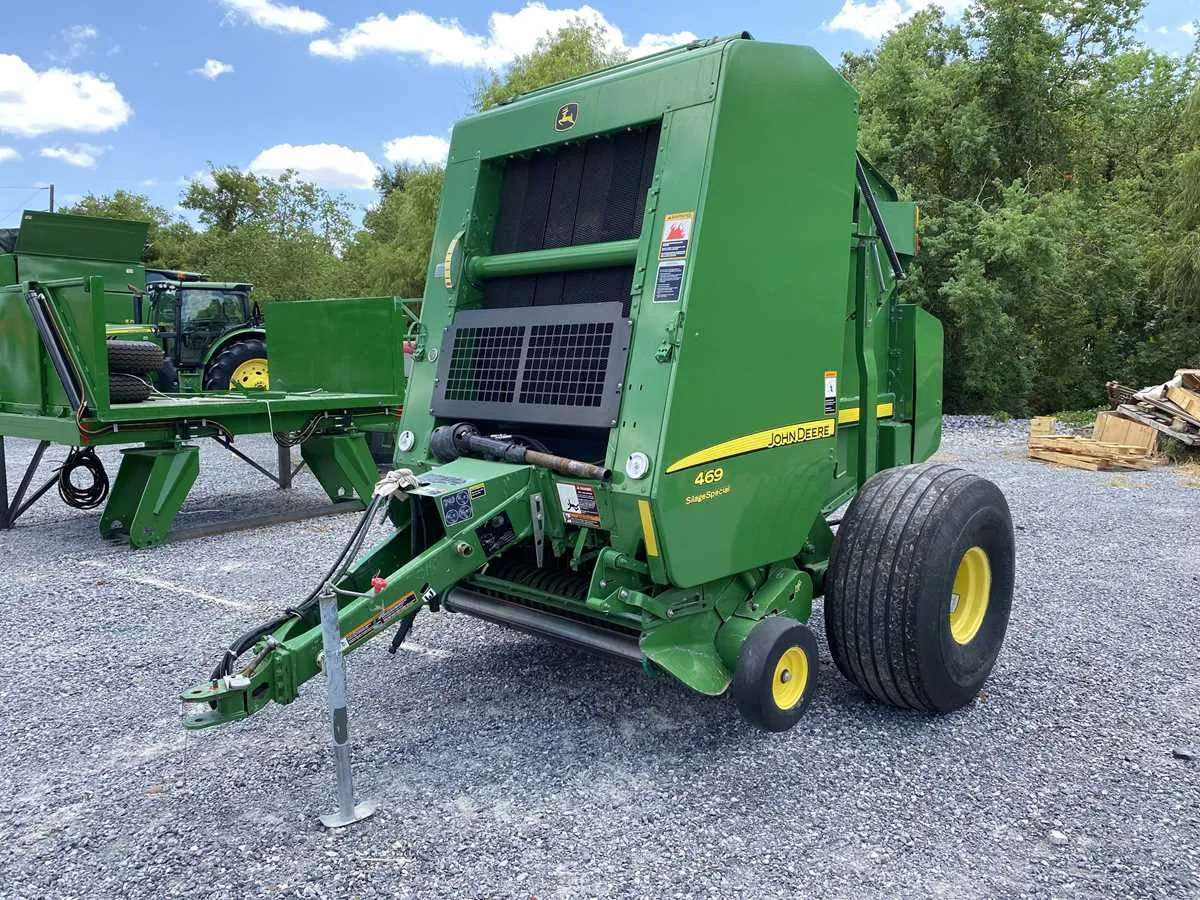
The John Deere 469 round baler combines efficiency and durability for high-performing agricultural work. With a 4×6 foot bale size, it creates dense, uniform bales with minimal effort. This model offers a solid design, built to handle a variety of crops with ease. Whether you are working with hay, straw, or silage, this baler is engineered to keep your operations running smoothly.
Its net wrap system ensures that bales are tightly secured and ready for transport or storage. The easy-to-use control system enhances operator comfort and productivity, while the advanced moisture sensor adjusts operations based on real-time conditions. With its 1000 RPM PTO and wide pickup, the 469 minimizes downtime and improves output, allowing for faster field processing.
The baler’s durable construction and simple maintenance requirements make it a reliable choice for anyone looking to increase efficiency and reduce operating costs. It’s a smart investment for large-scale farms or operations where speed and precision are key to success.
John Deere 469 Baler Specifications
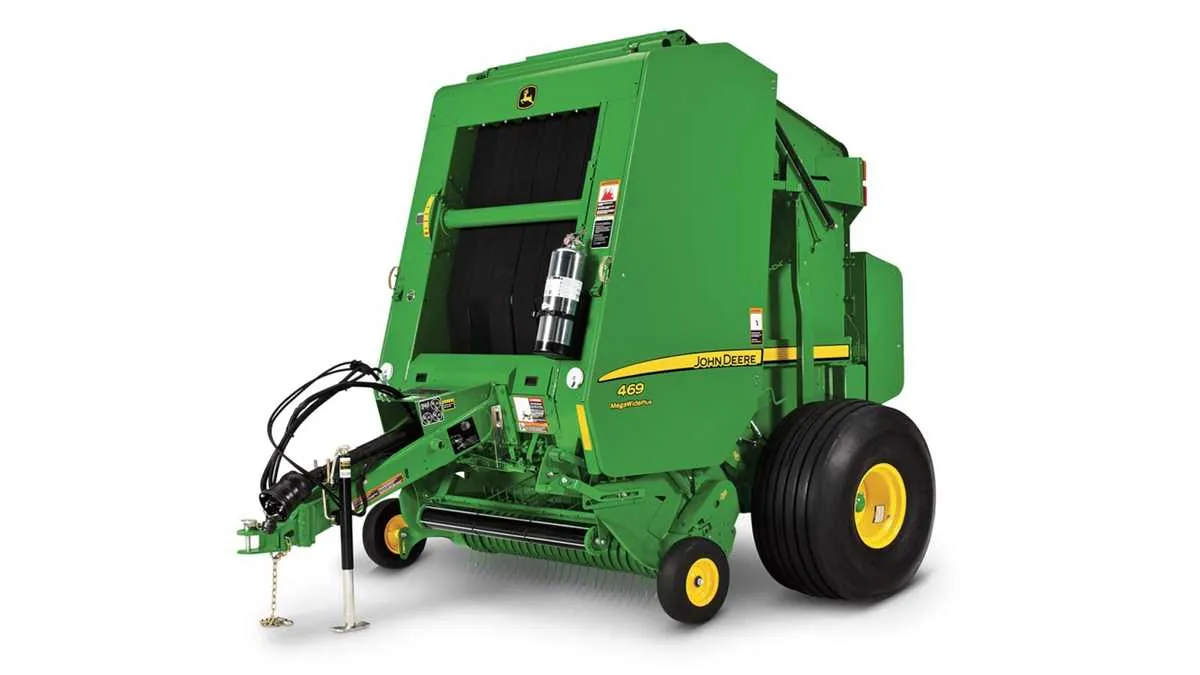
The John Deere 469 Baler excels in performance and durability. With its 4×6 bale size, it offers consistent, uniform bales, perfect for operators looking for high-quality output.
Key features of the John Deere 469 Baler include:
- Bale Size: 4′ x 6′ (1.22 m x 1.83 m) – providing optimal size for efficient storage and handling.
- Bale Chamber: A large, reinforced chamber ensures the formation of tight, compact bales, even in challenging conditions.
- Pickup Width: 7′ (2.13 m) – a wide pickup width reduces the number of passes needed, increasing productivity.
- Twine and Net Wrap: Dual tie system (twine or net wrap) gives flexibility in bale securing, ideal for different crop types.
- Hydraulic Drive: The fully hydraulic system simplifies operation and reduces maintenance, improving uptime.
- Hydraulic Bale Tension: Adjust bale density directly from the tractor cab, allowing precise control of bale tightness for maximum efficiency.
Other practical specifications include a robust pickup system with floating wheels to adjust to ground contours, reducing wear and improving the quality of bales in uneven fields. The baler’s strong frame, durable components, and user-friendly features make it an excellent choice for high-demand agricultural environments.
For consistent, reliable results, the John Deere 469 Baler stands out in its class. Its high bale density and ease of use ensure that operators can work faster and more efficiently while achieving excellent quality bales across a variety of crops.
John Deere 469 Baler Baling Capacity and Bale Size
The John Deere 469 Baler offers a maximum baling capacity of 4.5 tons per hour, depending on crop conditions and field terrain. This model is designed for high-efficiency operation, capable of handling a variety of crops, including hay, straw, and silage, making it versatile across different farming needs.
The standard bale size produced by the 469 is 5′ x 6′, delivering large, dense bales that are easy to handle and transport. The adjustable bale chamber allows operators to fine-tune bale density and size, ensuring consistency and reducing the frequency of bale breaks during handling. Bale weight typically ranges between 1,000 and 1,500 pounds, depending on material moisture and bale density settings.
For optimized performance, the 469 is equipped with a Power Density system, which automatically adjusts pressure to ensure uniform bale formation. This feature is ideal for maintaining bale integrity and reducing the time spent on adjustments, ultimately improving productivity. With the ability to form tightly compressed bales, the 469 minimizes storage space and increases efficiency when loading or stacking bales.
For farmers needing larger bales, the John Deere 469 Baler provides a reliable solution that supports significant productivity while maintaining ease of use and low maintenance. Regularly adjusting the bale chamber to match crop conditions ensures that operators achieve optimal results with minimal effort.
Power Requirements and Engine Compatibility for the John Deere 469 Baler
The John Deere 469 Baler requires a minimum of 90 horsepower for optimal performance. The baler is designed to work with tractors offering between 90 and 140 horsepower. Tractors with lower power ratings may struggle to maintain consistent bale formation, while higher-powered engines can offer improved efficiency but may require fine-tuning for the best balance of performance and fuel consumption.
For engine compatibility, the tractor’s PTO (Power Take-Off) speed should be set at 540 RPM. This ensures the baler operates within its designed range, preventing potential mechanical stress or inefficiencies. A 540 RPM PTO shaft is standard for most mid-range tractors, making the 469 Baler a versatile option for a wide array of farming setups.
It’s important to match the tractor’s hydraulics with the baler’s needs. The John Deere 469 requires hydraulic flow rates of 15-25 GPM. A tractor with insufficient hydraulic capacity can lead to poor bale formation or slower operation due to inadequate pressure for the machine’s systems.
Always check the tractor’s transmission and rear axle specifications as well. Tractors should be equipped with a 6-speed transmission or higher to allow the baler to work efficiently under various field conditions. Additionally, ensure that the rear axle can handle the weight and pulling force exerted by the 469 Baler, especially during dense or heavy hay bales.
Maintenance and Service Intervals for the John Deere 469 Baler
Check the net system every 100 bales to ensure proper tension and avoid misfeeds. Inspect the knotter assembly after every 1,000 bales. Regularly clean the knotter and lubricate with the recommended grease.
Grease the main bearings every 10 hours of operation. This includes the pickup, rotor, and other key moving components. Use the right grease as specified in the operator’s manual to prevent wear and ensure smooth operation.
Perform a full oil change on the engine after 100 hours of use. Replace the oil filter at the same time. For the hydraulic system, check the oil level and condition every 50 hours. Top up if necessary, and replace the filter every 500 hours or annually.
Inspect the pickup system every 50 hours to check for damage or wear. Replace the pickup teeth if they are worn down to ensure optimal performance. Clean the pickup thoroughly after each use, especially in dusty conditions, to avoid clogging.
The drive chains and belts should be checked every 50 hours for proper tension. Replace them immediately if they show signs of wear or if tension is inconsistent. Keep them clean and lubricated to prolong their lifespan.
Check the hydraulic hoses and connections for any signs of leaks or damage every 200 hours. Tighten any loose connections and replace any damaged hoses to prevent potential failures during operation.
Review the drum and rotor every 200 hours. Look for any signs of cracks or excessive wear. Balance the rotor if needed, and ensure that the drum is properly aligned to avoid unnecessary strain on the system.
At the start of each season, perform a complete inspection, including checking the bale chamber for blockages, ensuring the brakes function correctly, and reviewing the electrical system for any issues. Clean the machine thoroughly before storing it during the off-season.