John Deere 2030 Tractor Specifications and Key Features
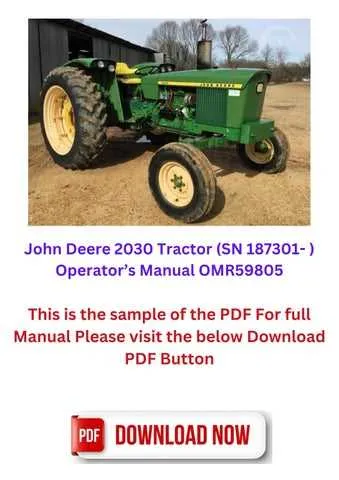
The John Deere 2030 tractor delivers reliable power and versatility for a wide range of agricultural tasks. Equipped with a 58-horsepower engine, it’s ideal for small to medium-sized farms, offering excellent fuel efficiency and consistent performance. The 2030’s 4WD capabilities ensure optimal traction on various terrains, while its easy-to-use controls make operation straightforward, even for those new to tractor work.
With a 5-speed transmission and hydraulics that can handle up to 1,650 PSI, this model is built to manage both light and heavy-duty tasks. The 2030 can handle a range of implements, from plows to mowers, without compromising on speed or stability. Whether you’re hauling loads or performing tillage, the 2030 provides consistent results with minimal downtime.
For maintenance, the 2030 John Deere is designed for straightforward servicing, with easily accessible components and a simple oil change routine. Regular maintenance intervals will keep it running smoothly for years, maximizing the lifespan of the tractor. If you’re looking for a tractor that combines power, ease of use, and longevity, the John Deere 2030 is an excellent choice for your farming needs.
John Deere 2030 Tractor Specifications
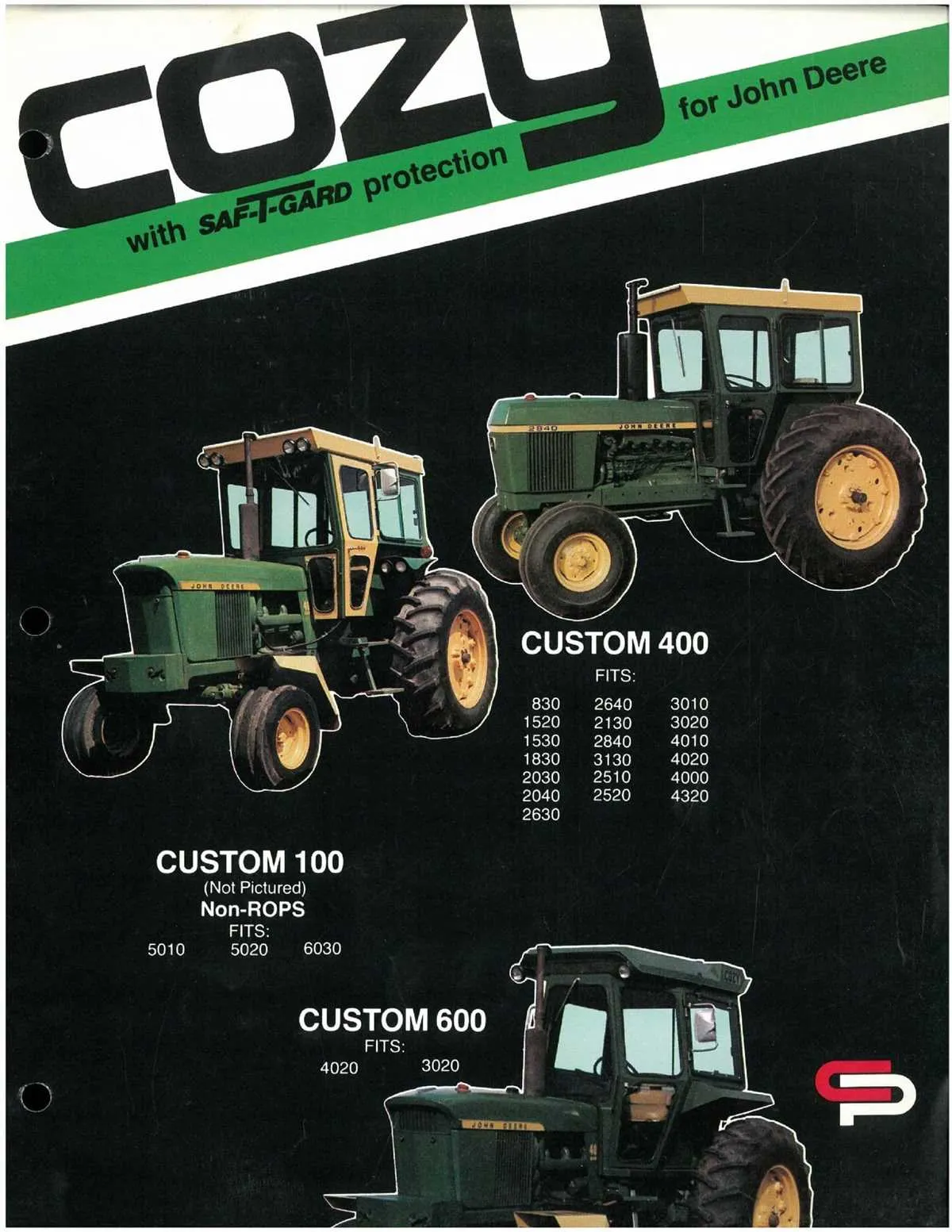
The John Deere 2030 is a versatile and durable tractor, ideal for a variety of farming tasks. It is equipped with a 3.0L engine, providing 55 horsepower at the PTO, which is suitable for handling medium-duty operations.
The engine features a 4-cylinder design with a liquid cooling system, ensuring reliable performance in various conditions. The tractor uses a gear drive transmission with 8 forward and 4 reverse gears, allowing smooth shifting and flexibility in different speeds and tasks.
The 2030 model comes with a mechanical front-wheel drive, providing enhanced traction and stability on uneven terrain. Its lifting capacity is impressive, with a 1,800 kg (3,968 lbs) maximum lift, allowing it to handle heavy implements and attachments efficiently.
With a fuel tank capacity of 58 liters, the tractor can run for extended hours without frequent refueling, ensuring greater efficiency during long working hours. The hydraulic system offers reliable power to run various implements, with a flow rate of 30.3 l/min.
For operator comfort, the 2030 features a spacious operator station with an adjustable seat and clear visibility, ensuring safety and productivity during long work sessions. The compact design and reasonable weight of 3,450 kg make it easy to maneuver in tight spaces while still providing enough power for demanding tasks.
Engine and Performance Details of the John Deere 2030
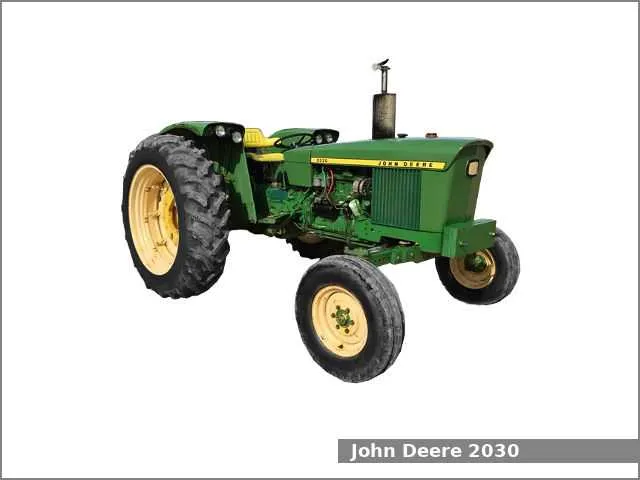
The John Deere 2030 features a 3.0L 4-cylinder engine that delivers 58 horsepower at 2200 RPM. This engine provides the power needed for a wide range of agricultural tasks, from plowing to hauling. The design focuses on fuel efficiency, with a direct injection system that optimizes fuel consumption and minimizes emissions.
The tractor is equipped with an 8-speed transmission, allowing for smooth operation at both high and low speeds. With a maximum torque output of 224 Nm, the 2030 offers sufficient pulling power for demanding tasks, while maintaining efficiency under load. The 12V electrical system ensures reliable starting and operation, even in colder conditions.
Regular maintenance is vital to keeping the engine in top condition. Oil changes should be performed every 150 hours of operation to maintain optimal performance. The cooling system is robust, designed to prevent overheating during extended working hours, making the tractor reliable and durable over time.
Transmission and Gearbox Features of the John Deere 2030
The John Deere 2030 features a fully synchronized transmission system, providing smooth and efficient shifting between gears. The tractor is equipped with a 12-speed transmission that allows operators to match the engine speed to different field conditions, ensuring optimal performance in various tasks.
It offers a choice of two transmission types: a standard unsynchronized gearbox or an optional synchronized gearbox. The unsynchronized gearbox requires the operator to stop the tractor before shifting gears, while the synchronized version enables shifting without stopping the tractor, making it more convenient for continuous operation.
The 2030 is equipped with a power shift option, allowing for smoother gear changes without the need to use the clutch. This feature enhances the tractor’s versatility, especially in demanding applications like tilling and heavy lifting.
- 12-speed transmission for versatile performance
- Synchronized and unsynchronized gear options available
- Power shift for smoother gear changes
- Convenient gear shift control for ease of use
This setup ensures that the John Deere 2030 can adapt to both fieldwork and road travel, making it a reliable choice for a variety of agricultural operations.
Maintenance and Service Considerations for the John Deere 2030
To maintain the John Deere 2030 in optimal working condition, regular servicing is required. Begin by checking the oil level every 50-100 operating hours. Change the engine oil every 150-200 hours or annually, whichever comes first. Ensure that the oil filter is replaced with each oil change for better engine longevity.
Inspect the air filter at regular intervals, especially in dusty conditions. Replace it if it appears clogged or damaged. A clean air filter improves engine performance and fuel efficiency.
The coolant system should be flushed every 2-3 years to avoid buildup and corrosion. Always check coolant levels before starting the engine, especially in hot weather. Ensure that the radiator is clean and free from debris for proper heat dissipation.
The transmission fluid should be checked regularly for leaks or contamination. Replace it according to the manufacturer’s recommended schedule to ensure smooth gear shifting and prevent wear on internal components.
Inspect the fuel system for leaks, and clean the fuel filter every 200 hours or sooner if you notice performance issues. A clogged fuel filter can lead to poor engine performance or even damage the fuel system.
Check the tire pressure and condition regularly. Proper tire inflation ensures optimal fuel economy, even wear, and prevents unnecessary strain on the tractor. Tires should be rotated if uneven wear is observed.
Finally, check the battery terminals for corrosion and ensure the battery is securely fastened. Clean terminals with a wire brush as needed and check for proper charge levels to avoid starting issues.