John Deere Sabre Garden Tractor Specifications and Features Overview
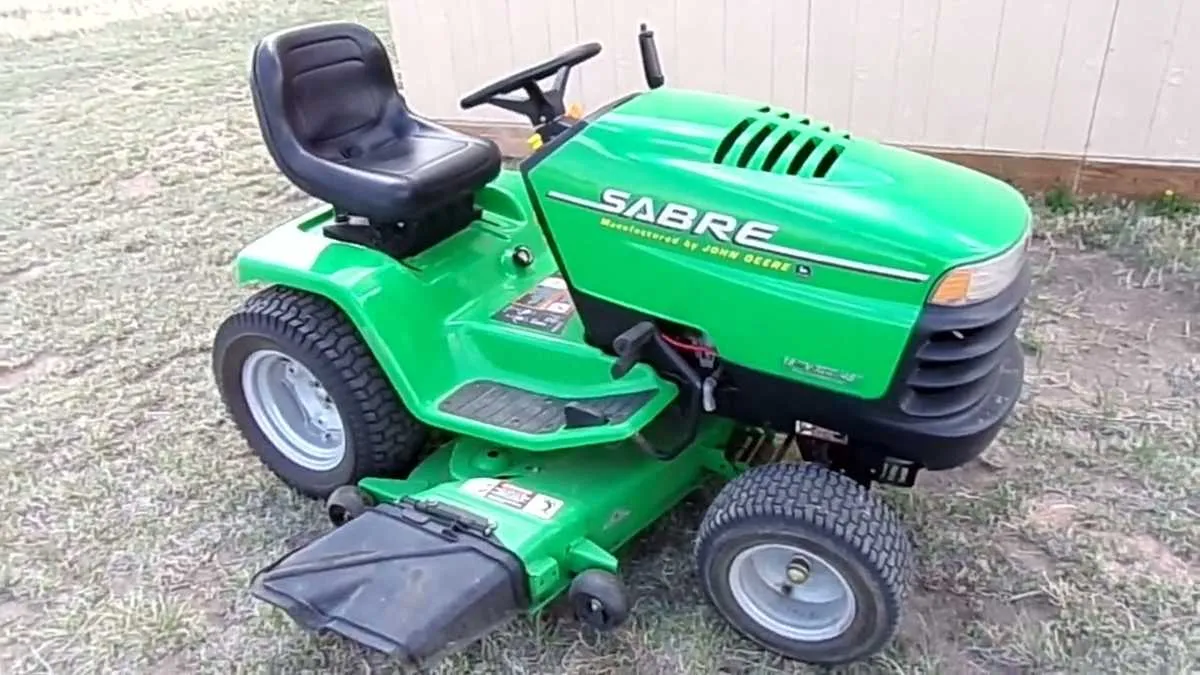
If you’re considering the John Deere Sabre Garden Tractor, you’ll appreciate its straightforward, reliable specifications. This model is built for those who need robust performance for various outdoor tasks. With a durable engine and high-quality components, the Sabre provides consistent power for mowing, hauling, and light gardening work.
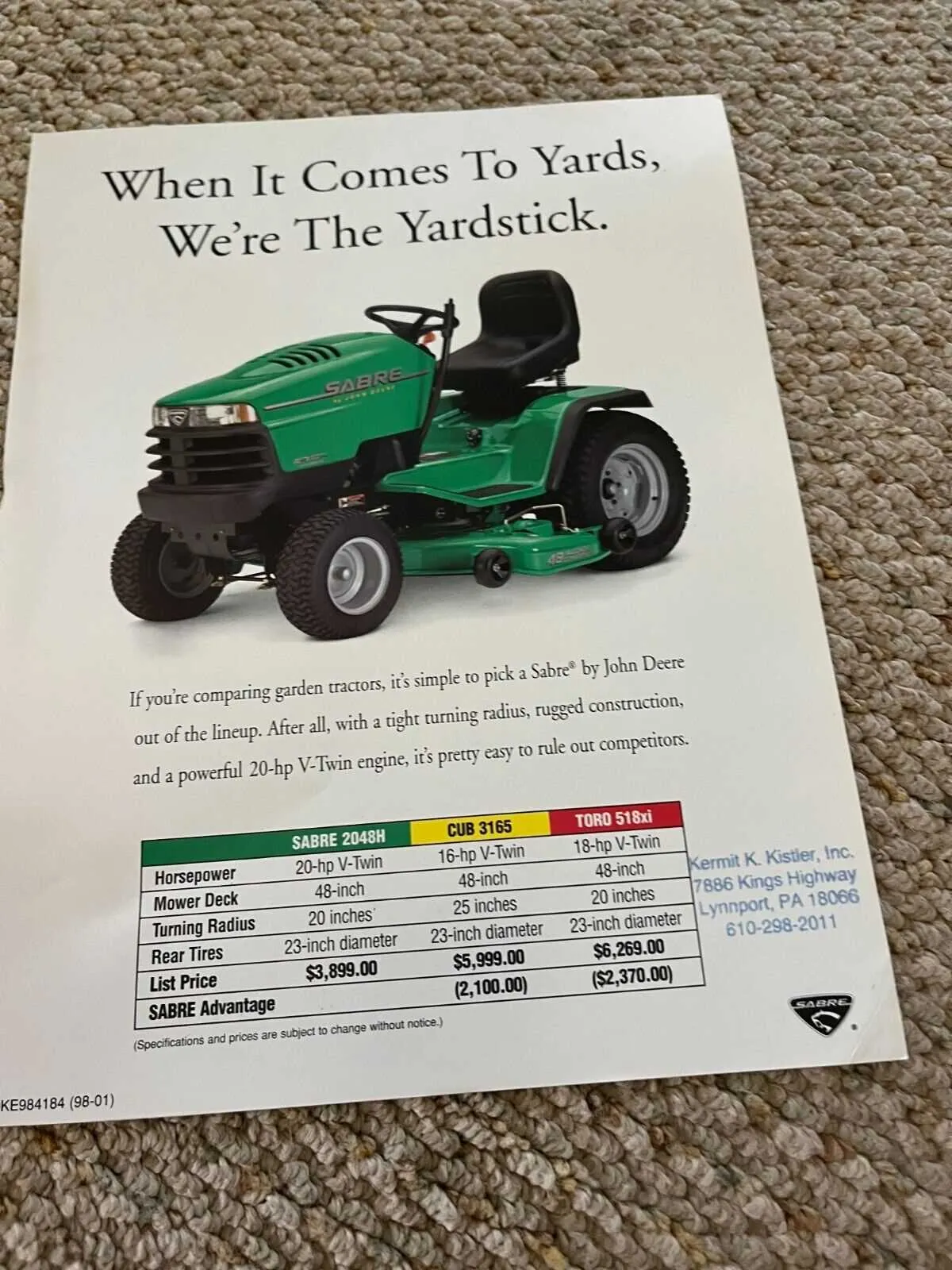
Equipped with a 17 to 23 horsepower engine, the Sabre series offers a reliable power range. Its 38 to 48-inch cutting deck ensures precise and even lawn care, while the hydrostatic transmission makes shifting effortless, providing smooth control even on uneven terrain. The tractor’s easy-to-operate layout and ergonomic design enhance user comfort, reducing fatigue during long tasks.
For added convenience, the Sabre features a tight turning radius, making it easy to maneuver around obstacles. The front and rear wheels are designed for stability, ensuring safe operation even in challenging conditions. Whether you’re dealing with small lawns or larger yards, this tractor adapts to various needs with ease, offering impressive versatility and durability for long-term use.
John Deere Sabre Garden Tractor Specs
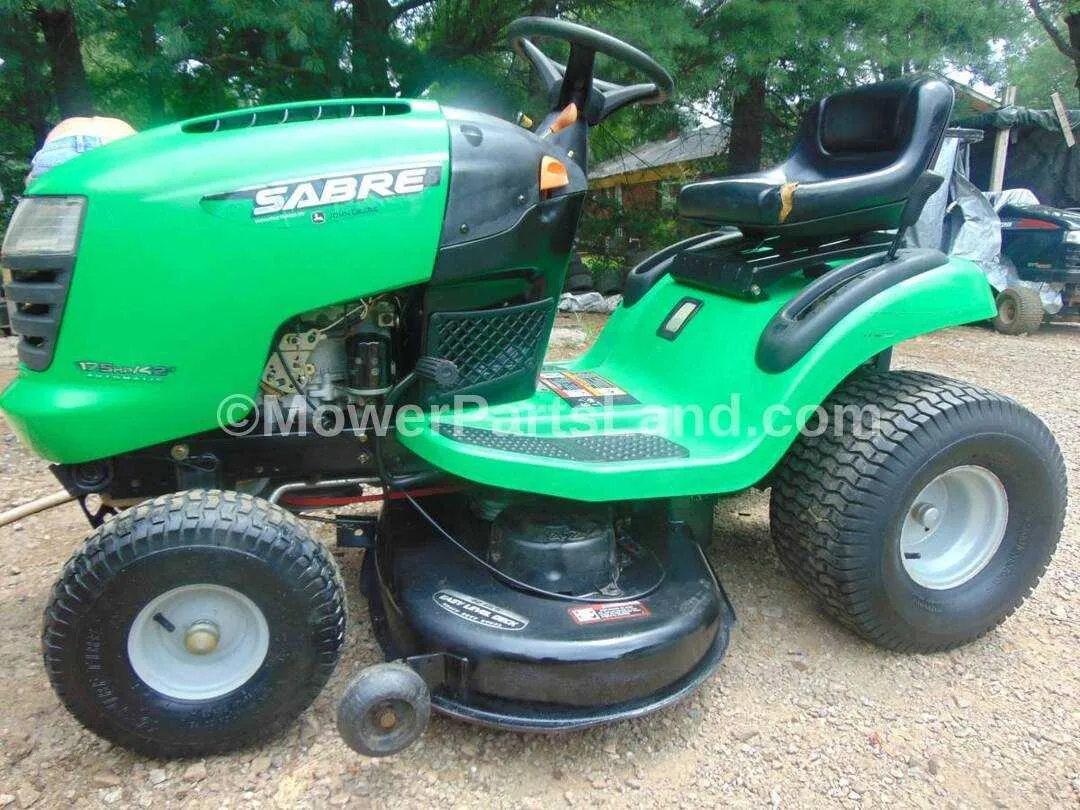
The John Deere Sabre Garden Tractor offers excellent performance for a variety of yard tasks. With a focus on durability and ease of use, this model caters to both mowing and light landscaping work.
- Engine: Powered by a reliable 17 to 20 horsepower engine, the Sabre tractor uses either a Kohler or Briggs & Stratton engine, ensuring smooth operation for various tasks.
- Transmission: Equipped with a hydrostatic transmission for seamless speed adjustments, providing superior control and comfort during operation.
- Cutting Deck: The tractor features a 42 to 48-inch cutting deck, offering adjustable height settings ranging from 1.5 to 4 inches to suit different mowing conditions.
- Fuel Tank: With a 2.5-gallon fuel tank, the Sabre tractor ensures longer work sessions without frequent refueling.
- Turning Radius: A tight turning radius of about 16 inches allows for better maneuverability in smaller spaces, making it ideal for navigating around garden beds or trees.
- Wheels: The Sabre comes with 15-inch front wheels and 20-inch rear wheels, providing stability and traction on various surfaces.
For users requiring more functionality, the Sabre Garden Tractor is compatible with numerous attachments, such as snow blowers, trailers, and tillers. Its solid construction and reliable engine make it a great choice for homeowners looking for a versatile and durable tractor.
Engine Specifications and Power Output of John Deere Sabre Tractors
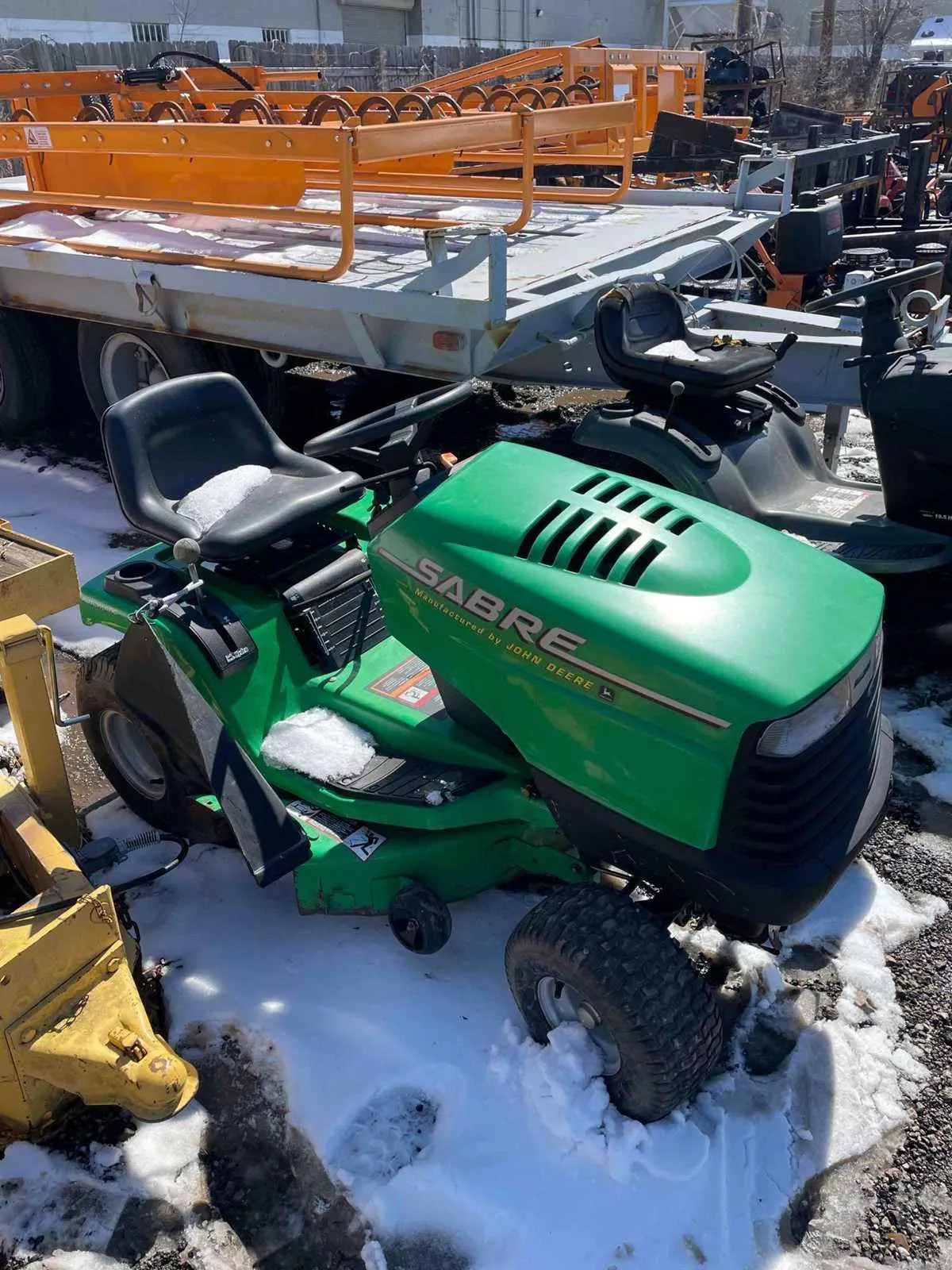
The John Deere Sabre garden tractors are equipped with reliable engines designed for a variety of tasks, including mowing, hauling, and light towing. These tractors feature engines from respected manufacturers like Briggs & Stratton and Kohler, ensuring durability and consistent performance. The Sabre models typically offer a range of engine power, from 12 to 20 horsepower, allowing users to choose the right model based on their specific needs.
For example, the 12.5 HP Briggs & Stratton engine in the Sabre 1240 is ideal for small to medium-sized properties, delivering a steady power output suitable for regular lawn care. Meanwhile, models like the Sabre 1650, equipped with a 16.5 HP Briggs & Stratton engine, provide extra power for more demanding tasks such as towing carts or using additional implements like snow plows or garden tillers.
The engines in these tractors are designed with an emphasis on ease of maintenance. The overhead valve (OHV) design enhances fuel efficiency and reduces emissions, while the easy-to-access oil filter and air cleaner make routine servicing simpler. Additionally, most models come with a hydrostatic transmission, which pairs well with the engine’s power output for smooth operation and effortless control on different terrains.
When selecting a John Deere Sabre tractor, consider the engine size and its match with the tasks at hand. Larger engines provide increased torque and power, ideal for heavier-duty applications, while smaller engines remain highly effective for standard lawn care. The reliability of these engines ensures that the tractor performs optimally over time, with minimal maintenance required.
Transmission Options and Speed Variability in John Deere Sabre Tractors
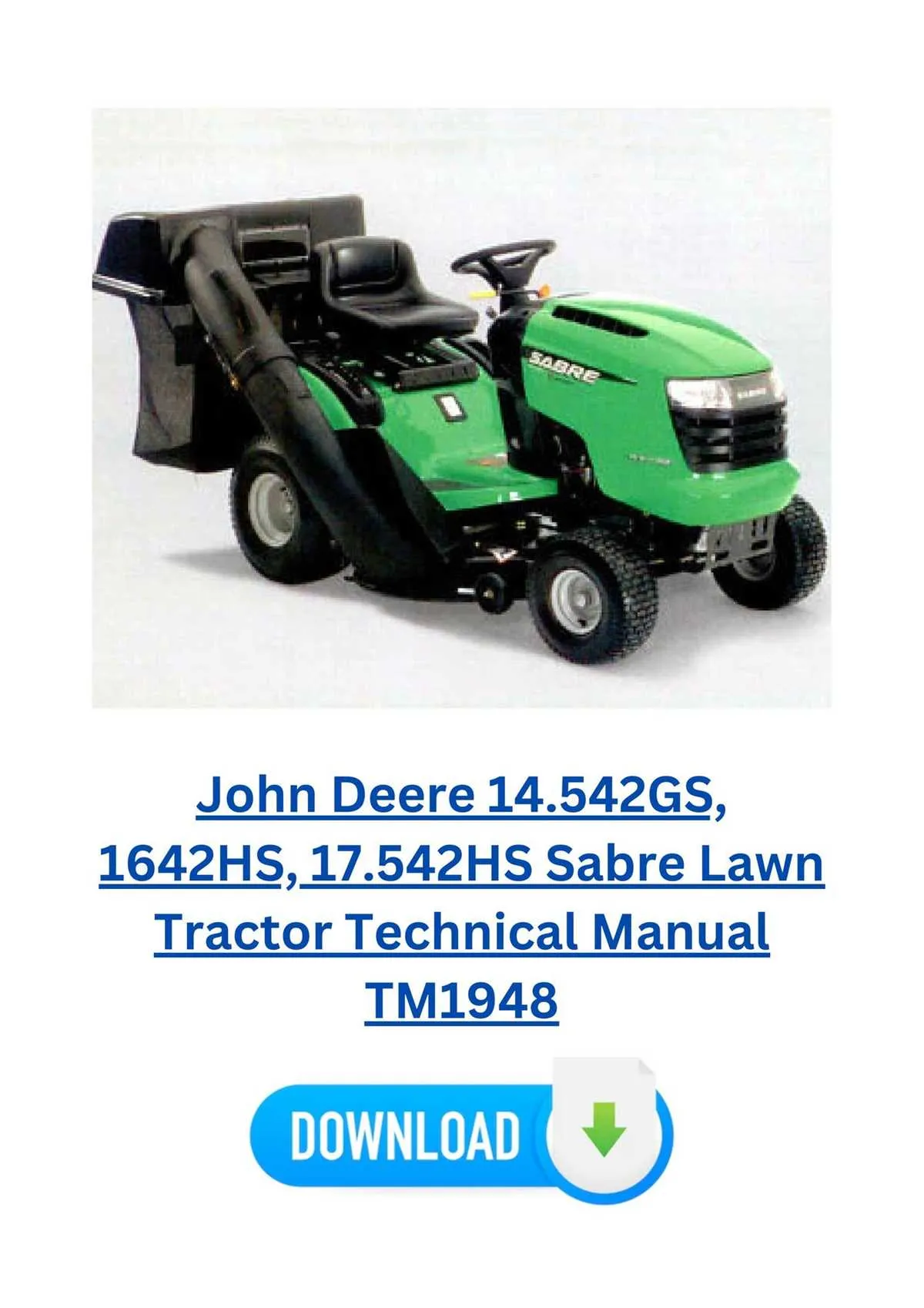
The John Deere Sabre tractors offer a variety of transmission options designed to suit different needs. Whether you’re looking for a smooth, easy-to-use transmission or one that allows more control, Sabre tractors provide a selection tailored to specific tasks.
For those seeking simplicity, the belt-driven transmission is a reliable choice. It offers straightforward operation, with fewer components to maintain. This type of transmission is common in the lower-end models, providing adequate power for light residential tasks.
If you need more precision, the hydrostatic transmission option might be a better fit. This system offers infinite speed control, making it ideal for maneuvering around obstacles or when fine control is necessary. Hydrostatic transmissions are especially beneficial for users with larger properties, as they adjust seamlessly to various terrains.
The speed variability in John Deere Sabre tractors differs between the transmission types. Belt-driven models typically operate within a set speed range, offering consistent but less flexible performance. On the other hand, hydrostatic models can seamlessly adjust their speed, offering greater flexibility. Hydrostatic transmission allows for smooth acceleration and deceleration without shifting gears, making it easier to adapt to changing conditions on the fly.
Depending on your needs, the Sabre tractor can be equipped with a transmission system that aligns with your desired level of control and speed variability. For general lawn care, the belt-driven transmission may be sufficient. However, for more demanding tasks or varying terrain, hydrostatic transmission delivers a more responsive and adaptable performance.
Maintenance Guidelines and Service Intervals for John Deere Sabre Garden Tractors
Check the oil after every 50 hours of use, or at least once a season. Change it if it’s dirty or degraded to maintain engine performance. Use high-quality oil recommended by John Deere for optimal results.
Inspect the air filter every 25 hours. Replace or clean it as needed, especially if you notice a decrease in engine performance or when operating in dusty conditions.
Sharpen the mower blades at least once a season, or more often if you mow in tough conditions. Dull blades cause uneven cutting and increase the load on the engine.
Clean the cooling fins and radiator screens every 50 hours to prevent overheating and ensure proper engine cooling. A dirty cooling system can significantly affect engine life.
Lubricate the tractor regularly. Apply grease to the wheel bearings, steering components, and any other moving parts to reduce wear and tear. Follow John Deere’s recommendations for lubrication intervals and types of grease.
Replace the spark plug every 100 hours or annually, whichever comes first. A worn-out spark plug reduces engine efficiency and starts. Always use the recommended type for your model.
Check the tire pressure regularly to avoid uneven wear and improve traction. Inflate them to the recommended PSI to enhance safety and performance.
Inspect the battery periodically, cleaning off any corrosion from terminals. Check the charge level and ensure the battery is firmly secured in place.
After every 100 hours of use, inspect the belts for signs of wear and replace them if necessary. Worn belts can affect mower deck performance and engine efficiency.
Perform a full maintenance check at least once a season, even if the tractor hasn’t reached the recommended hours. Clean the deck, inspect the frame, and ensure all parts are securely fastened.