Technical Specifications and Field Capabilities of the John Deere 400 Rotary Hoe
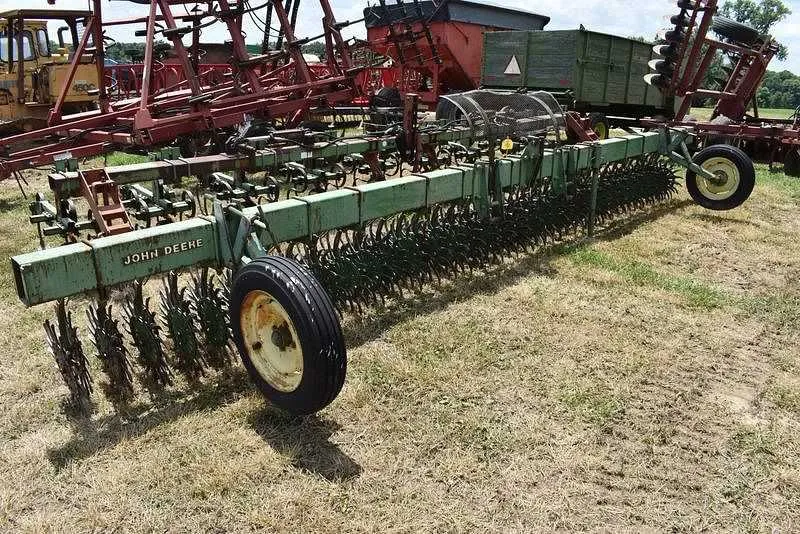
Choose the 400 rotary hoe from John Deere if you need consistent soil aeration in high-residue environments. Its 60-inch wheels with 20 curved spoon-type hoes per gang create uniform penetration at working speeds up to 10 mph. This model handles residue-heavy no-till fields without clogging, even with plant material like corn stalks or wheat straw.
Adjust the tine depth mechanically with precision using the rear-mounted depth-control lever. The rotary hoe’s three-point hitch compatibility fits Category II tractors, and the implement’s weight–approximately 2,000 lbs for a 20-foot model–ensures adequate ground contact without excessive downforce. Pairing with a 75+ hp tractor maintains traction and operational balance in dry or compacted conditions.
Each wheel hub uses sealed bearings to minimize maintenance. Grease fittings are easily accessible from the outside of the gang arms. Replaceable spoons simplify field repairs–each tine is secured by two bolts. For prolonged service life, inspect for wear every 500 acres and replace worn spoons in matched sets to maintain balance and performance.
John Deere 400 Rotary Hoe Specifications for Field Application
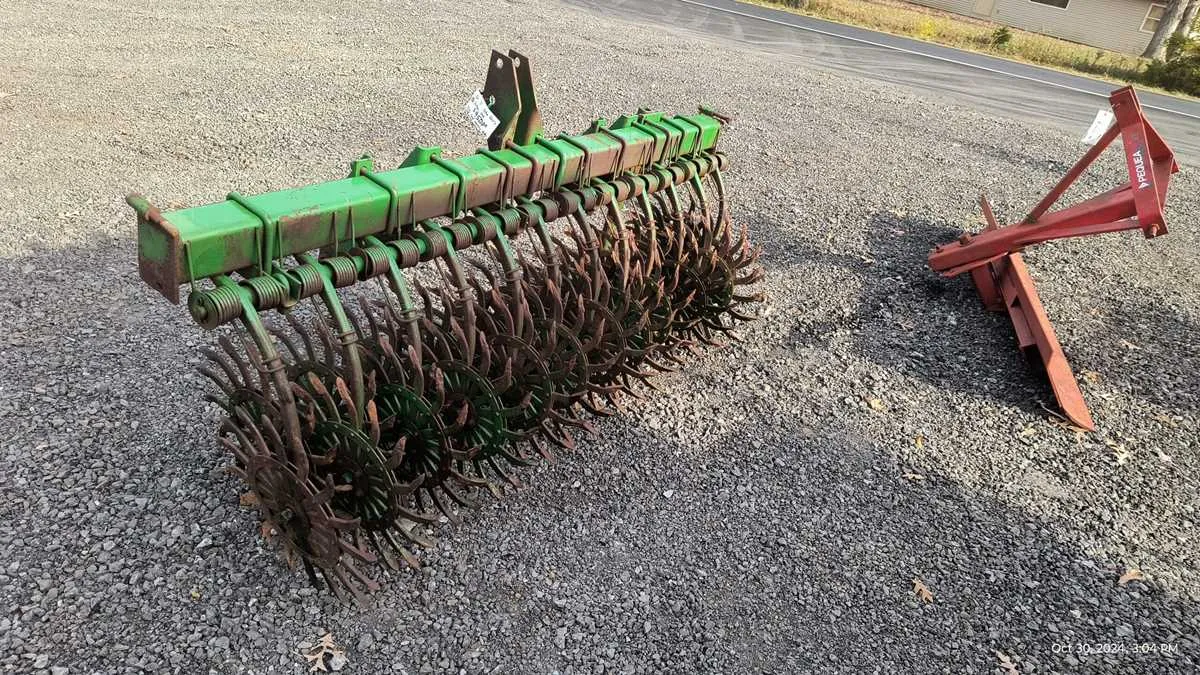
Choose the John Deere 400 rotary hoe with a working width that matches your tractor’s horsepower and the scale of your tillage operations. The most common configurations include 15-, 20-, and 25-foot models, offering flexibility for different field sizes and soil types.
- Working width: 15 ft to 25 ft (4.6 m to 7.6 m)
- Hoe wheels: 12-inch diameter with 60–100 wheels per unit, spaced approximately 7 inches apart
- Row spacing compatibility: Adjustable row spacing fits most standard crop row widths
- Tractor power requirement: 5–7 horsepower per foot of implement width
- Operating depth: 0.5 to 1.5 inches (1.3–3.8 cm), depending on soil hardness and field conditions
Use the 400 rotary hoe shortly after rainfall or irrigation to break crust and improve emergence. The independent wheel design ensures better surface contact and minimizes crop damage. Avoid excessive speed–6 to 10 mph is ideal to balance soil aeration and minimize disruption.
Field tests show optimal performance in corn, soybean, and cotton fields where early weed control and soil loosening are needed. For best results, inspect tine wear after every 500 acres and replace damaged wheels immediately to maintain consistent coverage.
Working Width Configurations and Section Folding Mechanism
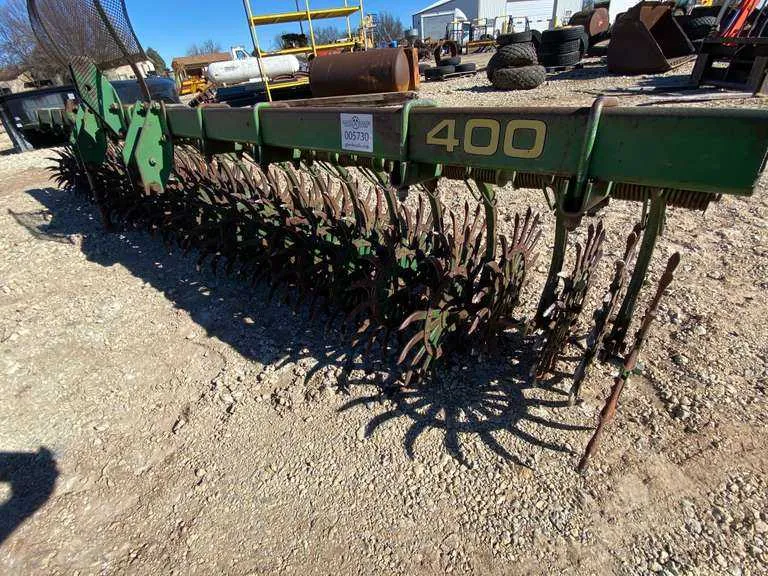
Select the 15-foot, 20-foot, 25-foot, or 30-foot working width based on field size and tractor horsepower. The 20-foot model fits best with tractors in the 75–110 HP range, offering an ideal balance between coverage and control. For larger fields and higher-horsepower tractors, the 30-foot configuration significantly increases hourly productivity.
Each width includes modular 5-foot sections equipped with individually mounted rotary wheels. This segmented design ensures consistent soil contact and quick ground contour adjustment, especially on uneven terrain. The narrowest 15-foot model features three rigid sections, while larger models implement folding mechanisms for transport and maneuverability.
The 25- and 30-foot models use a dual-folding wing system with hydraulic cylinders that reduce machine width to under 13 feet during transport. This setup allows safe road movement without requiring special transport permits. Folding is controlled directly from the tractor’s hydraulic outlets, eliminating manual adjustments.
To avoid frame stress, Deere integrates transport locks and heavy-duty hinges rated for repetitive use under load. Section folding remains reliable even in dusty or debris-heavy conditions due to the sealed pivot points and protected hydraulic lines. Check pivot bushings and wing cylinders every 250 hours to ensure long-term performance.
Tine Design Parameters and Soil Penetration Capabilities
Select tines with a hardened spring-steel profile and a minimum diameter of 0.625 inches to maintain structural integrity under continuous impact. The John Deere 400 rotary hoe typically features 60 to 96 tines per section, spaced approximately 7.5 inches apart for balanced soil coverage and debris clearance.
Each tine should have a curvature radius of 10 to 12 inches, optimized for aggressive soil contact while minimizing surface disruption. A tip angle between 30° and 40° relative to vertical ensures reliable penetration into compacted crust without gouging or clumping.
Maintain a working depth of 1 to 1.5 inches to achieve optimal aeration and crust breaking, especially in post-rain or dry-sealed conditions. This depth range prevents seed disturbance while promoting uniform emergence. Tine flexibility allows for individual articulation, which helps compensate for small surface irregularities and preserves tool alignment across varying terrains.
Use tines with self-sharpening action or abrasion-resistant tips to extend wear life under abrasive conditions. Monitor tine wear regularly–once tine length is reduced by more than 15%, replace to maintain consistent soil penetration and avoid uneven field performance.
To ensure proper engagement, operate at a forward speed of 8 to 12 mph. This speed range enhances the kinetic force at the tine tip, promoting better crust shattering without compacting subsoil layers.
Hitch Compatibility and Tractor Power Requirements
Use a Category II 3-point hitch to connect the John Deere 400 rotary hoe securely and maintain stable implement control during field operation. Avoid Category I systems, as they lack the structural support and lift capacity needed for consistent depth and tine engagement.
Match the implement with a tractor delivering at least 7–10 PTO horsepower per foot of working width. For example, a 20-foot model requires a tractor with 140–200 PTO horsepower, depending on soil resistance and operating speed. Operating below the recommended power range may reduce tine penetration and limit ground coverage.
Ensure the tractor’s hydraulic lift capacity exceeds the implement’s weight. A 20-foot rotary hoe typically weighs 2,800–3,400 pounds, depending on the tine count and folding configuration. Check the operator’s manual for precise lift specifications based on the specific model width.
For folding models, verify that the tractor’s hydraulic system supports the required number of remote valves–typically one to two sets–for wing folding and locking. Incompatibility may delay transport setup or compromise safety during maneuvering.
Keep the top link level during attachment to maintain proper tool angle. Incorrect hitch geometry leads to uneven tine wear and reduced performance, especially in variable soil conditions. Adjust lower link arm stabilizers to eliminate sway and ensure straight-line tracking.