John Deere 1590 Specifications and Key Features for Optimal Performance
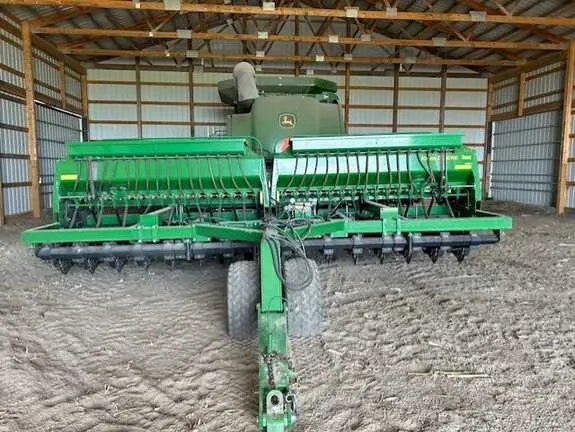
The John Deere 1590 offers robust features that make it a standout in the seeding world. Designed for precision, it ensures uniform seed placement and soil penetration with its advanced seed metering system and versatile frame. The drill’s durable construction guarantees high performance even in tough conditions.
With a 10-foot working width, it is ideal for a variety of soil types. The John Deere 1590 integrates a strong, adjustable depth control system, making it adaptable to different planting depths. Its ability to handle small and large seeds with equal efficiency is one of its strongest points.
In addition, the seeding unit’s closing wheels ensure proper seed-to-soil contact, maximizing germination rates. This model also comes with a hydraulic down pressure system, which helps in adapting to varying soil conditions. Whether you’re planting in moist or dry conditions, the 1590 offers consistent results.
If you’re looking to boost productivity and reliability, the John Deere 1590 won’t disappoint. It combines technology with user-friendly adjustments, making it a preferred choice for both small and large-scale operations.
John Deere 1590 Specs
The John Deere 1590 Drill is built for reliability and precision. With a durable frame and user-friendly design, it’s ideal for no-till or conventional planting. Here’s a breakdown of its key specifications:
- Width: Available in 10′, 15′, and 20′ working widths to suit various field sizes.
- Seed Capacity: Features a 65-bushel hopper capacity, ensuring fewer refills during planting.
- Row Spacing: Configurable with 7.5″, 10″, or 15″ row spacing for flexibility in crop planting.
- Seeder Type: Precision seeding with a dual-disk opener, designed for accurate seed placement even in tough conditions.
- Weight: Around 3,600 pounds for the 10′ model, offering stability and traction on uneven ground.
- Power Requirements: Compatible with tractors ranging from 85 to 180 horsepower, providing a solid match for various farm operations.
- Gauge Wheels: Adjustable gauge wheels for depth control, helping you maintain uniform seed placement.
- Transport: Easy transport with folding wings for compact storage and road transportation.
For farmers needing consistent performance, the John Deere 1590 provides a straightforward solution. The robust build, along with adjustable settings, allows you to adapt the drill for various soil types and planting conditions.
John Deere 1590 Seeder Dimensions and Weight
The John Deere 1590 Seeder has compact dimensions and is designed for ease of transport and maneuverability. It has a width of 12 feet and 6 inches (3.81 meters) with a length of approximately 22 feet (6.7 meters) when fully extended. This size ensures it can handle large seeding tasks while still fitting in standard field conditions.
In terms of weight, the John Deere 1590 Seeder weighs around 8,000 pounds (3,629 kg) without the weight of the seed. This weight is well-balanced for stability during operation, reducing the risk of tipping or uneven seed placement.
For transport, the machine can be folded to a narrower width, allowing it to be easily moved between job sites or stored in tighter spaces. The folding mechanism reduces its width to 7 feet 6 inches (2.29 meters), making it easier to navigate roads and access smaller fields.
These dimensions make the 1590 Seeder versatile and adaptable, offering a good balance between capacity and ease of transport for both large-scale and smaller operations. Its weight and dimensions should be taken into account when selecting equipment to ensure compatibility with your existing fleet and field requirements.
Key Features of John Deere 1590: Hydraulic System and Drive Mechanism
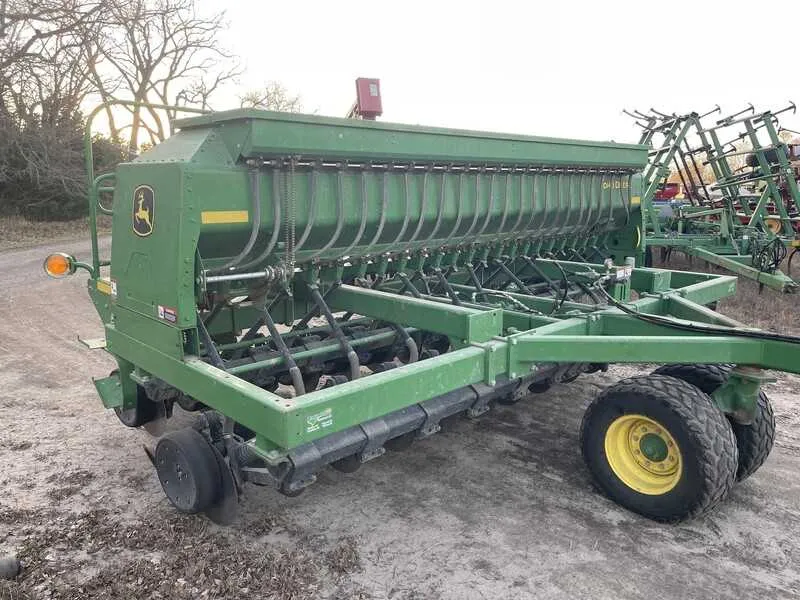
The hydraulic system of the John Deere 1590 provides precise control and power to the planter, ensuring smooth and consistent operation across varying soil conditions. The system is designed to handle heavy-duty tasks, with a high-flow capacity to support row units, markers, and other accessories without compromising performance. For improved efficiency, the hydraulic functions are integrated to minimize energy consumption while maintaining optimal performance. When operating, the hydraulics allow for easy adjustments to the planting depth, ensuring the best results for different crops and soil types.
The drive mechanism of the John Deere 1590 plays a critical role in the accuracy and reliability of seed placement. It features a central drive that efficiently transfers power from the tractor’s PTO to the row units. This direct drive system eliminates the need for belts or chains, reducing maintenance requirements and improving the planter’s durability. The system’s design ensures uniform seed distribution across all rows, even during high-speed operations, maintaining consistent planting depth and spacing. The drive mechanism, combined with the hydraulic control, ensures the John Deere 1590 is adaptable to a range of field conditions.
John Deere 1590 Seeder Maintenance: Key Guidelines for Optimal Performance
Regularly check the seed discs for wear and tear. Replace them if you notice any significant damage, as worn-out discs can lead to uneven seed placement and reduce planting efficiency.
Inspect the closing wheels to ensure they are properly aligned and free of debris. Misalignment can result in improper seed coverage, impacting seed germination.
Lubricate all moving parts, including the seed meters, bearings, and driveshafts. Use the recommended grease to prevent friction, reduce wear, and maintain smooth operation.
Check tire pressure on the seeder regularly. Incorrect tire pressure can lead to uneven seed depth and inconsistent planting. Adjust it according to the specifications in the operator’s manual.
Inspect the hydraulic system for leaks and check oil levels. Low hydraulic fluid can impair the performance of planting units, affecting planting accuracy and consistency.
Keep the seed metering system clean. Clogged or dirty meters can cause inconsistent seed flow, affecting planting depth and spacing. Clean the meters after each use to avoid this issue.
Inspect and tighten all bolts and fasteners on the frame and other components. Loose bolts can lead to mechanical failures and reduce the lifespan of the seeder.
Periodically check the depth control system to ensure it is functioning properly. Adjust the depth settings based on soil conditions to ensure optimal seed placement.
After each season, perform a full inspection of the seeder to identify any worn-out parts. Address minor issues early to prevent costly repairs down the line.
Store the John Deere 1590 Seeder in a dry, sheltered area during off-seasons. This will help protect it from the elements and prevent rust buildup, ensuring it’s ready for the next planting season.