John Deere Cool-Gard II Specifications and Features
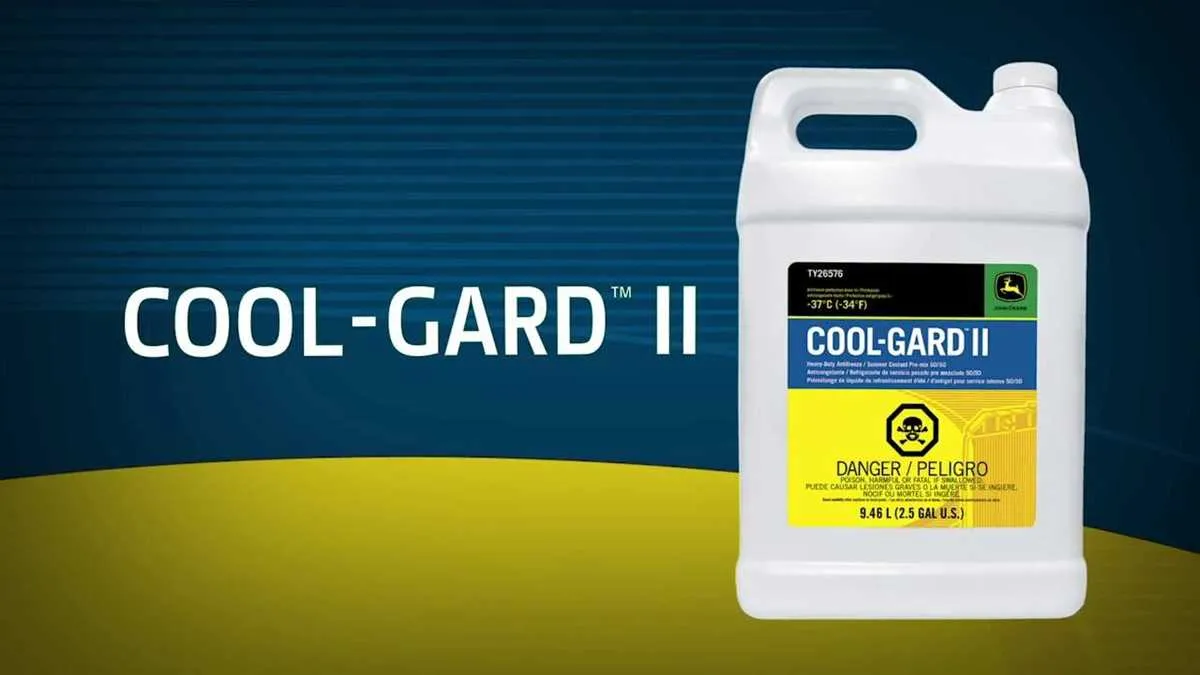
John Deere Cool-Gard II is designed for high performance and durability, particularly in extreme operating conditions. It delivers superior protection to the engine, ensuring reliable operation in both hot and cold environments. Its advanced formula offers long-lasting protection against corrosion, scaling, and rust buildup, making it a dependable choice for agricultural and industrial machinery.
The product stands out due to its optimized coolant chemistry, which helps in maintaining consistent engine temperatures. This results in improved efficiency and reduced engine wear, crucial for extending the lifespan of critical components. The unique blend of additives also improves heat transfer, making the fluid more effective at dissipating heat, even under strenuous use.
For maintenance, it is recommended to check coolant levels regularly and replace it according to John Deere’s maintenance schedule, typically every 1,500 to 2,000 hours of engine operation or after 2 years, whichever comes first. The fluid should be replaced sooner if it shows signs of contamination or degradation.
John Deere Cool-Gard II Specifications
John Deere Cool-Gard II is a high-performance coolant designed to provide optimal engine protection. It is engineered for use in a wide range of John Deere equipment, including tractors and other machinery. The coolant is formulated to resist corrosion, prevent scale formation, and offer extended service life, reducing maintenance requirements.
The primary specifications of Cool-Gard II include its freeze protection capability, which can withstand temperatures as low as -34°F (-37°C), making it suitable for harsh environments. Its long-lasting properties are complemented by its ability to maintain engine temperatures efficiently under varying load conditions.
Cool-Gard II contains a special additive package that helps extend the lifespan of cooling system components by preventing corrosion. This is especially important in systems with aluminum components, as the coolant’s corrosion inhibitors are tailored to protect both ferrous and non-ferrous metals. It also offers superior protection against cavitation, which can damage the water pump and other critical parts of the engine cooling system.
In addition, the coolant is compatible with the OAT (Organic Acid Technology) system, making it ideal for John Deere engines that require extended intervals between coolant replacements. The product meets the stringent specifications outlined by John Deere for use in their engines and cooling systems, ensuring compatibility and peak performance.
The recommended dilution ratio is 50/50 (coolant to distilled water) for optimal freeze and boil-over protection. However, depending on environmental conditions, it may be adjusted. Regular monitoring of the coolant level and condition is advised to ensure maximum engine protection over the long term.
For those using Cool-Gard II in their equipment, routine inspection of the cooling system and the coolant itself will ensure that the system continues to operate at its best, preventing any unforeseen downtime.
Cool-Gard II Composition and Fluid Characteristics
John Deere Cool-Gard II is a premium coolant formulated with advanced additives to ensure high engine protection. It consists primarily of water and ethylene glycol, providing superior heat transfer and freeze protection. The blend includes corrosion inhibitors designed to safeguard vital engine parts, such as the radiator, water pump, and cylinder head. These inhibitors protect against rust, scale, and the buildup of harmful deposits.
The fluid has a high thermal stability, preventing breakdown at elevated engine temperatures. It maintains its viscosity, offering smooth circulation within the engine and radiator system. The fluid also contains organic acids that promote long-term engine protection by reducing wear and tear. Cool-Gard II’s formula is designed to prevent foaming, ensuring consistent coolant flow and efficient engine cooling under all conditions.
With a longer service life than traditional coolants, Cool-Gard II is engineered to last up to 4,000 hours in typical agricultural machinery, reducing the frequency of fluid changes. This contributes to lower maintenance costs and increased downtime efficiency. The fluid is also designed to be compatible with all John Deere engines, ensuring reliable performance and seamless integration into your equipment’s cooling system.
Optimal Temperature Range and Operating Conditions
John Deere Cool-Gard II operates best within a temperature range of 50°F to 90°F (10°C to 32°C). Maintaining this temperature ensures the coolant’s efficiency in heat dissipation, preventing engine overheating or excessive cooling.
The fluid’s performance drops significantly if the temperature exceeds 105°F (40°C) or falls below 20°F (-6°C), which could lead to engine damage. In colder climates, the antifreeze properties are key, while in hotter environments, the coolant’s heat-resistance becomes critical.
Always monitor the engine’s temperature and ensure that the system remains in the recommended range. Operating in extreme temperatures may require adjustments or additional cooling solutions to optimize performance and avoid potential damage.
Maintenance Guidelines for Cool-Gard II Performance
Regularly inspect the Cool-Gard II fluid to maintain optimal engine cooling. Check the coolant levels and top up as necessary to ensure the engine operates within the recommended temperature range.
Change the coolant every 1,500 hours of operation or every 2 years, whichever comes first. This helps in maintaining the fluid’s corrosion resistance and preventing buildup of harmful deposits.
Monitor the coolant’s pH level. If it drops below 7.0, replace the coolant to prevent corrosion of engine components. Using a coolant testing kit will provide accurate readings.
Ensure the radiator cap is in good condition. A faulty radiator cap can lead to loss of coolant under pressure, reducing the fluid’s efficiency and potentially causing engine overheating.
- Check the condition of hoses and clamps, ensuring there are no leaks or cracks.
- Inspect the radiator for any signs of blockages or damage.
- Verify that the thermostat operates correctly by testing the engine’s temperature response.
Be cautious when using water for dilution. Always use distilled or deionized water to avoid mineral deposits, which can compromise coolant performance.
If the system is exposed to extreme temperatures, consider switching to a coolant with a lower freezing point or a higher boiling point to match the environment. Always refer to the engine’s manual for guidance on fluid types compatible with Cool-Gard II.
- Keep the coolant system clean and free from contaminants.
- Inspect the coolant for signs of rust, particles, or discoloration, which indicate a need for replacement.